TL:DR 50% reduction in AHI (apnea-hypoxia index) and a lowering of blood pressure (which may reduce risk of stroke and heart attack!)
Obstructive sleep apnea is one of the most common respiratory disorders worldwide. Persons with obstructive sleep apnea can have loud snoring that is detrimental to social relationships and have breathing problems that result in recurrent nocturnal awakenings, unrefreshing sleep, and excessive daytime sleepiness — effects that together can substantially impair quality of life.
The improvement in systolic blood pressure that was seen with tirzepatide was substantially larger than effects seen with CPAP therapy alone7 and indicate that tirzepatide may be an attractive option for those patients who seek to reduce their cardiovascular risk
The initial results from the SURMOUNT-OSA trial show the usefulness of tirzepatide as an adjunctive treatment to address coexisting obesity in patients with obstructive sleep apnea. Weight loss resulting from tirzepatide treatment may be leveraged to expand the populations that may benefit from second-line treatments for obstructive sleep apnea.
(The GLP1 drugs are favorites for Dr Varipapa, improving health in so many ways!)
A large trial showed that semaglutide, sold as Ozempic for diabetes and as Wegovy for obesity, was better than any current medications in alleviating symptoms.
(Dr Varipapa suspects Mounjaro and Zepbound to have similar if not better benefit as it is even better for treatment of obesity!)
The blockbuster drug semaglutide, sold as Ozempic for diabetes and as Wegovy for weight loss, now has a new proven benefit: It markedly soothed knee pain in people who are obese and have moderate to severe osteoarthritis, according to a large study.
The effect was so pronounced that some arthritis experts not involved with the clinical trial were taken aback.
“The magnitude of the improvement is of a scope we haven’t seen before with a drug,” said Dr. Bob Carter, deputy director of the National Institute of Arthritis and Musculoskeletal and Skin Diseases. “They had an almost 50 percent reduction in their knee pain. That’s huge.”
If you can’t touch your toes without majorly bending your knees, that’s a sure sign you could benefit from doing hamstring stretches. But even if you can touch your toes easily, you should still be stretching your hamstrings every day. According to personal trainers, daily hamstring stretches are something literally everyone can benefit from. That means whether you sit all day or you live a pretty active life, you should be doing them.
Not sure where to start?
7 Hamstring Stretches to Do At Home
Just like anything else when it comes to fitness (and health, and life in general, really), when it comes to hamstring stretches, Ofori-Atta says that consistency is key; if you don’t make it a regular habit, you’re not going to benefit all that much. He recommends spending 10 minutes every day moving through some hamstring stretches.
1. Active assisted hamstring stretch
When doing this stretch, Ofori-Atta says to make sure you aren’t rounding your back. This will ensure your hamstrings are doing all the work while preventing lower back pain.
1. Start by laying flat on your back. Lift one leg up and bend the knee to 90 degrees.
2. Hold the leg that is in the air and bent at the knee. Place your hands on your hamstring, gently pulling your leg toward your body.
3. Hold for 30 seconds. Switch legs and repeat.
2. Seated one leg hamstring stretch
Ofoti-Atta likes this stretch because it’s simple and can be done anytime, like when you’re watching TV or before bed. When doing it, he says to avoid rounding your shoulders.
1. Sit on the floor and sit up straight, extending one leg out in front of you.
2. Reach toward your toes grabbing as far down your leg as you can.
3. Hold for 30 seconds to 1 minute. Then, switch legs and repeat.
3. Standing hamstring stretch (forward fold)
“This is the most simple and accessible hamstring stretch to try,” Weber says. Besides stretching the hamstrings and calves, it also helps relieve shoulder and neck tension.
1. Start standing up with your feet together. Exhale and bend at the hips.
2. Let your head hang down and reach toward the floor as far as you can.
3. Hold for 30 seconds and then slowly stand back up.
4. Seated forward bend
This hamstring stretch is essentially the sitting version of the standing hamstring stretch. “It activates the entire back and depending on flexibility levels, you can incorporate a band to help with stability,” Weber says.
1. Sit on the floor with your legs straight out in front of you. Sit up as tall as you can.
2. As you exhale, reach toward your toes. If using a band, place the band around your feet and grab each side with your hands.
3. Hold for between 30 seconds and 1 minute before gently coming out of the stretch.
5. Kneeling hamstring stretch
Ofori-Atta says this is another great “anytime” stretch; you can do it when you’re watching TV, after a workout or before bed.
1. Start in a kneeling position, with both knees on the floor.
2. Extend one leg out straight in front of you.
3. Place your hands on the thigh of the extended leg. Tilt the torso forward while keeping your back straight. Hold for 30 seconds. Then, switch legs and repeat.
6. Straight Leg Monster Walk Dynamic Stretch
About to go on a run or work out? Here’s a dynamic hamstring stretch Kraft recommends. You will need a resistance band to do this stretch.
1. Wrap a resistance band around your ankles and stand with your feet shoulder-width apart.
2. Squat down and place your hands on your hips.
3. Walk side to side for between 30 seconds and 1 minute.
7. Dynamic Hip Hinge
“This is one of my favorite hamstring stretches because it’s done wonders for my tight hips and hamstrings,” Kraft says, adding that he believes it’s improved his running times. He recommends doing it before running, lifting or any other athletic activity.
1. Start on your knees. Bring one leg straight out to the side, keeping the foot on the floor. Your back should be straight.
2. Hinge at the hip, keeping the chest up. Hold for five seconds. Then, come back to the starting position.
3. Repeat for between 30 seconds and 1 minute. Then, switch legs.
Other Ways To Relieve Hamstring Tightness
While all three trainers say that regular hamstring stretching is non-negotiable, there are other ways to relieve tightness. Ofori-Atta and Kraft are both big fans of foam rolling balls, placing it right under the hamstring and gently moving it around. “You should feel it, but it shouldn’t feel painful,” Ofori-Atta says.
A quick shake of the head after a hard hit could signal that a person has a concussion, a new study suggests, based on the experiences of young athletes.
It’s an easily recognizable movement that could help significantly reduce the number of concussions that go undiagnosed if added to official evaluation guidelines, according to researchers from Mass General Brigham and the Concussion Legacy Foundation.
“We describe it in detail as a time that after a hit to the head, someone laterally shakes their head at a speed between two and eight Hertz. But that’s complicated medical terminology for something we’ve all seen,” said Dr. Dan Daneshvar, a study co-author and co-chair of sports concussion at Mass General Brigham.
Cartoons often depict a circle of birds that fly away after the character shakes their head, for example.
“There’s such a strong lay understanding of this being associated with concussions,” he said, but it’s not included in guidelines or medical literature.
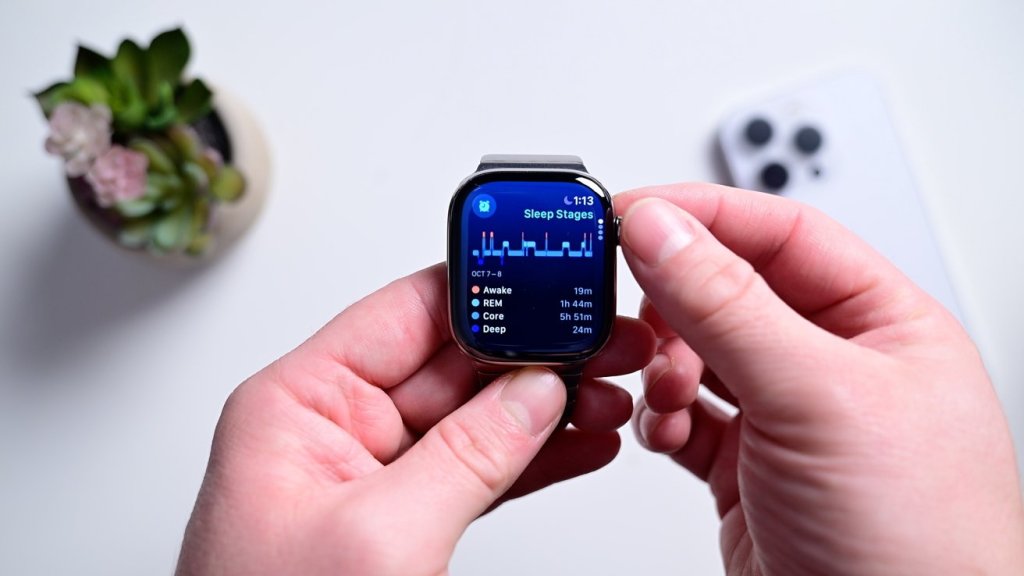
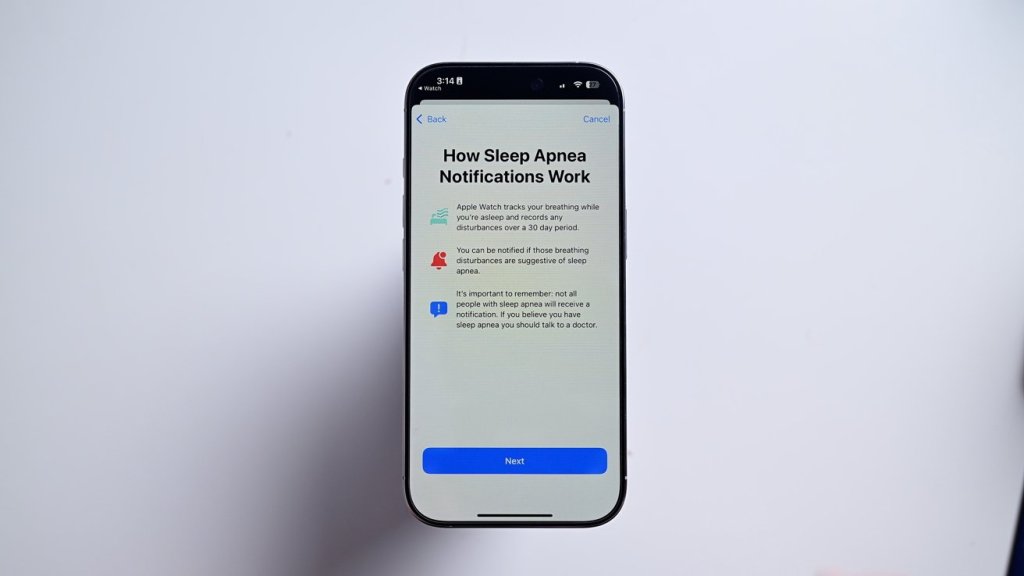
It’s quick and easy to set up sleep apnea detection. It is done from your iPhone.
• Open the Health app on your iPhone
• Go to Browse and search for “breathing disturbances”
• The first time you’ll see a button at the top that says “set up”
• Answer a couple qualifying questions and hit continue
• The app gives you a brief explainer, after which you can hit next
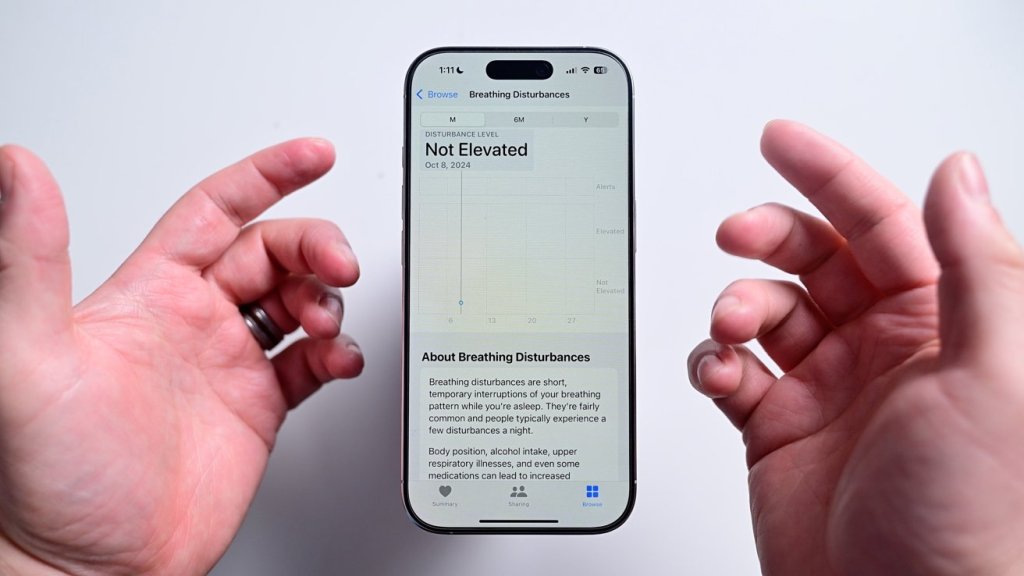
Viewing your sleep apnea results
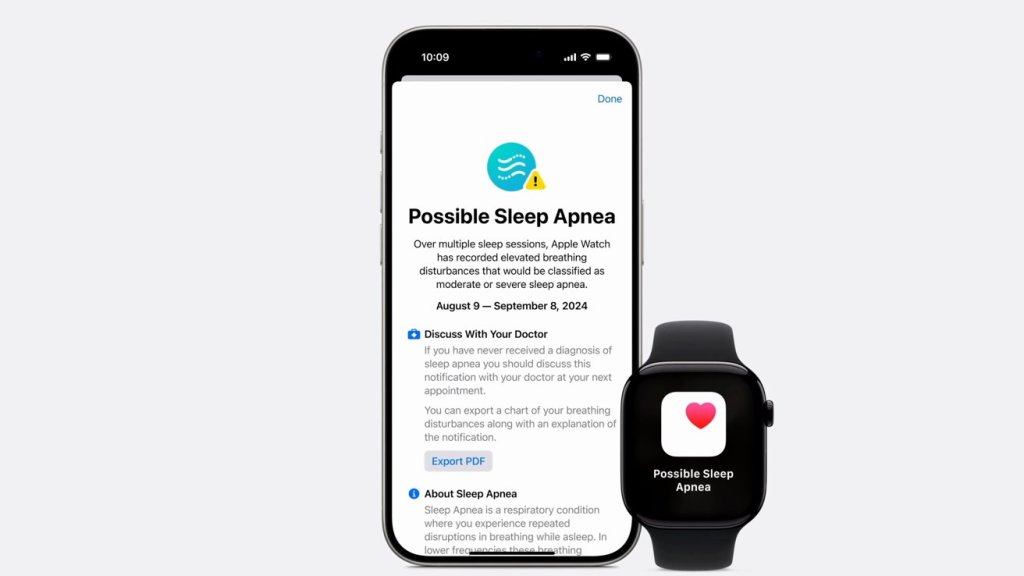
As soon as your first night you’ll see your results reflected in the Health app. If it detects an elevated level of breathing disturbances, it will proactively send you an alert.
If you want to view the data for yourself, you can open the Health app once more and navigate back to breathing disturbances. It will show each night’s results on a graph on a scale from not elevated to elevated. You can view it for each night or over time. To be clear, if a positive detection is triggered, it’s not diagnosing you with anything. The data can be exported and shared with your health care provider where they can make a further diagnosis.
Scientists have found that human beings age at a molecular level in two accelerated bursts – first at the age of 44, and then again at 60.
In a study published in the journal Nature Aging, scientists at Stanford University and Nanyang Technological University in Singapore followed 108 participants over several years to observe aging changes in their molecules — RNA, proteins and participants’ microbiomes.
The scientists found that human aging does not happen in a gradual, linear way. Rather, the majority of the molecules they studied showed accelerated, non-linear changes at the ages of 44 and 60.
Try Coffee Planking “Every morning I get up and make coffee for my wife and me. One cup takes one minute 18 seconds to brew, and every morning for the last 12 months I have planked for this period. Simple thing, using the dead time.”
Sort out your life! 100 tiny tricks to help with everything from digital overwhelm to lumpy sugar and unpaid bills
Scientists identify the brain cells that regulate inflammation, and pinpoint how they keep tabs on the immune response.
Scientists have long known that the brain plays a part in the immune system — but how it does so has been a mystery. Now, scientists have identified cells in the brainstem that sense immune cues from the periphery of the body and act as master regulators of the body’s inflammatory response
The results in Nature suggest that the #Brain maintains a delicate balance between the molecular signals that promote inflammation and those that dampen it — a finding that could lead to treatments for autoimmune diseases and other conditions caused by an excessive immune response
Some of my favorite people made the Time100 Health list. Katelyn Jetelina, Eric Topol, Peter Attia, Peter Hotez stand out for me, among others. Be sure to check out the list linked below!



 CNMRI: Neurology, Sleep Medicine, MRI