This fall marks the second year that we’ve had Respiratory Syncytial Virus (RSV) vaccines to offer older adults. Chances are you have received one, are eligible to receive one, or have older family/friends who qualify but are wondering what to do. I’ve been fielding lots of questions about the RSV vaccines from patients over the past several weeks… and this year we have more evidence-based answers than last year.
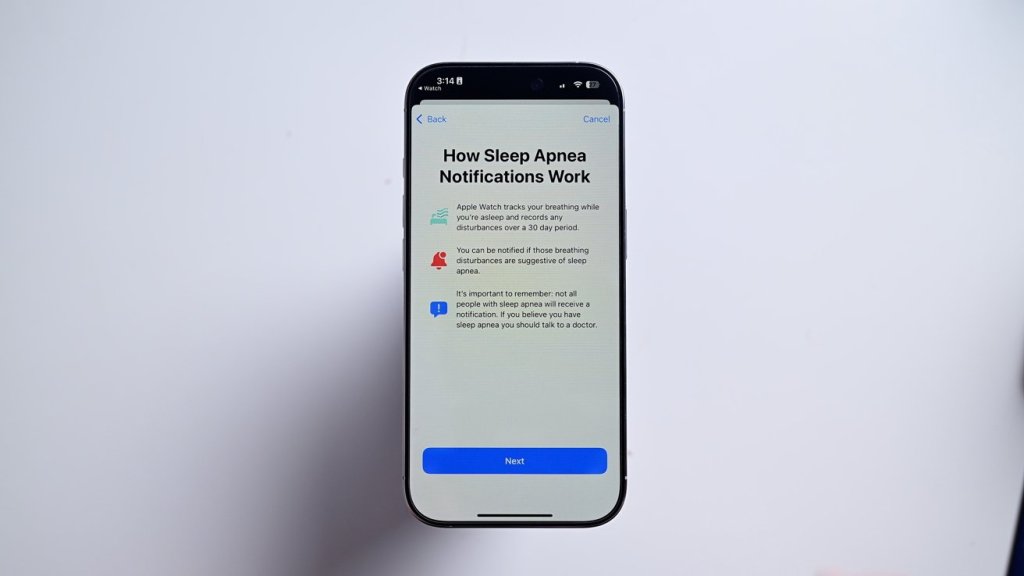
It’s quick and easy to set up sleep apnea detection. It is done from your iPhone.
• Open the Health app on your iPhone
• Go to Browse and search for “breathing disturbances”
• The first time you’ll see a button at the top that says “set up”
• Answer a couple qualifying questions and hit continue
• The app gives you a brief explainer, after which you can hit next
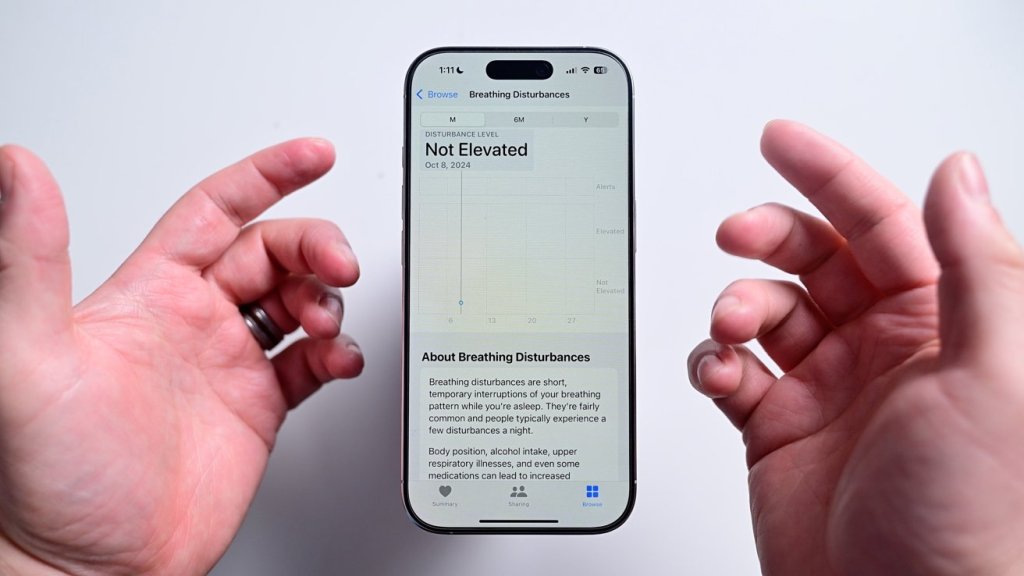
Viewing your sleep apnea results
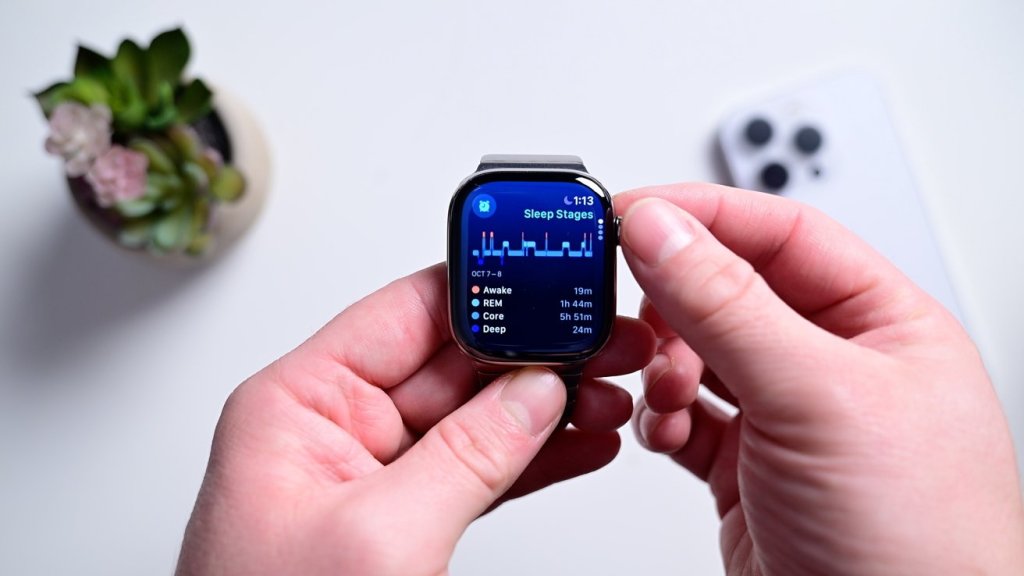
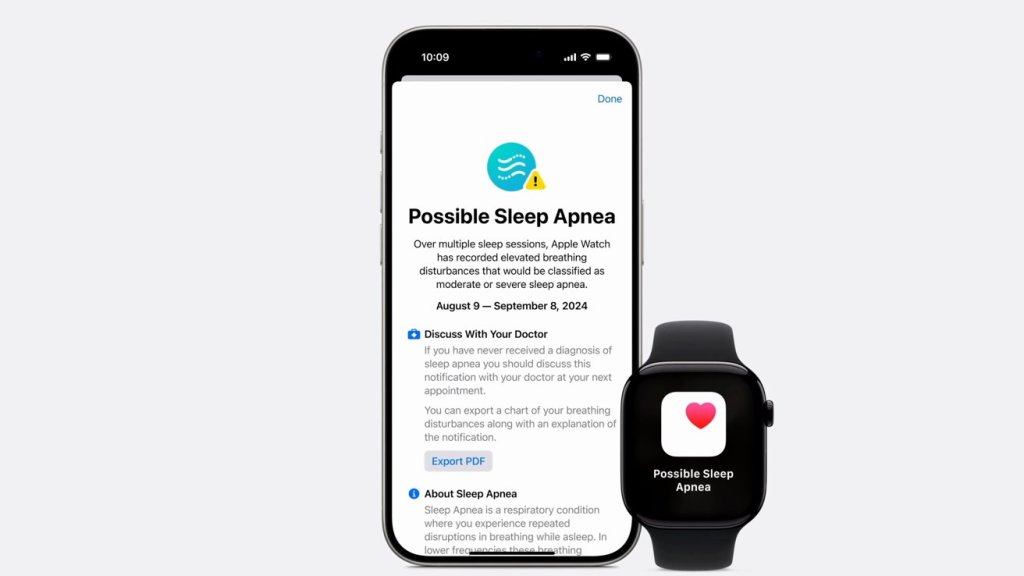
As soon as your first night you’ll see your results reflected in the Health app. If it detects an elevated level of breathing disturbances, it will proactively send you an alert.
If you want to view the data for yourself, you can open the Health app once more and navigate back to breathing disturbances. It will show each night’s results on a graph on a scale from not elevated to elevated. You can view it for each night or over time. To be clear, if a positive detection is triggered, it’s not diagnosing you with anything. The data can be exported and shared with your health care provider where they can make a further diagnosis.
Scientists have found that human beings age at a molecular level in two accelerated bursts – first at the age of 44, and then again at 60.
In a study published in the journal Nature Aging, scientists at Stanford University and Nanyang Technological University in Singapore followed 108 participants over several years to observe aging changes in their molecules — RNA, proteins and participants’ microbiomes.
The scientists found that human aging does not happen in a gradual, linear way. Rather, the majority of the molecules they studied showed accelerated, non-linear changes at the ages of 44 and 60.
Stroke is preventable by monitoring and controlling blood pressure, cholesterol, diabetes, not smoking, limiting alcohol and engaging in an exercise program.
After dropping in the early 2000s, the overall proportion of people in the U.S. who had survived a stroke rose by 7.8 percent from 2011 to 2022, the U.S. Centers for Disease Control and Prevention reported in May. While strokes typically happen in older people, another CDC report from August found deaths from stroke among Americans aged 45-64 had increased 7 percent from 2013 to 2019—and then risen an additional 12 percent through 2021.
A new study in the Lancet Neurology reveals more people worldwide are surviving after a stroke, with no increases and even some decreases in strokes among adults over 70—but increases in strokes in younger adults, particularly those under 55.
“It’s important to know that stroke can happen at any age,” says Omoye Imoisili, an internal medicine doctor and the lead author of the May CDC study.
Among persons with moderate-to-severe obstructive sleep apnea and obesity, tirzepatide (Mounjaro, Zepbound) reduced the AHI, body weight, hypoxic burden, hsCRP concentration, and systolic blood pressure and improved sleep-related patient-reported outcomes.
“Curbing addiction isn’t the only potential extra benefit of GLP-1 drugs.
Mounjaro Zepbound Ozempic Wegovy
Other studies have suggested they can reduce the risk of death, strokes and heart attacks for people with cardiovascular disease or chronic kidney ailments, ease sleep apnea symptoms and even slow the development of Parkinson’s disease. There are now hundreds of clinical trials testing the drugs for these conditions and others as varied as fatty liver disease, Alzheimer’s disease, cognitive dysfunction and HIV complications.”
Here are five other common red flags to look out for.
Running red lights. Falling for scams. Shutting out friends.
Memory loss is the most well-known symptom of dementia, particularly Alzheimer’s disease. But experts say there are other warning signs that can signal early brain changes — ones that are especially important for types of dementia where forgetfulness is not the primary symptom.
Sleep disorders can become more common as people age, and older adults tend to sleep more lightly and go to bed and wake up a little earlier than they used to — that is completely normal. But if there are dramatic changes in someone’s sleep habits, where they are starting their morning at 3 a.m. or are unable to stay awake during the day, it can be a sign of dementia.
3. Personality Changes
In a study published last year, researchers found that people with dementia experienced slight drops in extroversion, agreeableness and conscientiousness before they showed any signs of cognitive impairment.
4. Driving Difficulties
Along with handling finances, driving is one of the most complex cognitive behaviors people perform every day. Ganesh Babulal, an associate professor of neurology at Washington University in St. Louis, has demonstrated in his research that problems behind the wheel can manifest years before they do elsewhere.
5. Loss of Smell
Parts of the brain that control smell, known as the olfactory system, are among some of the first areas damaged in Alzheimer’s disease and dementia with Lewy bodies; this is also the case for Parkinson’s disease. Many people with these conditions begin to lose their sense of smell years, or even decades, before other symptoms appear.
“For the past century, heart disease has remained the leading cause of death in the United States. Fortunately, as our understanding of the disease has evolved over time, we have made advances in treatment options to help people reduce their risk for a devastating cardiovascular event, like a heart attack or stroke.
But staying one step ahead of this disease requires both providers and patients to continually follow and implement the latest science and regulatory guidance on what treatment options are safe, effective, and FDA-approved. Sadly, this isn’t happening and misinformation about treatment options poses a significant public health concern, which the FDA has acknowledged and in July issued new guidance on how companies can combat it.”
MIGRAINE ATTACKS ARE no ordinary headache. They can cause intense pain and sickness, lasting hours or even days, making it impossible to do anything but rest in a dark, quiet room. And for millions of women, these debilitating attacks aren’t just an occasional experience but a recurring ordeal.
Women suffer from migraines three times as often as men, with episodes that are more prolonged and intense. “It’s far more common than most people realize,” says Anne MacGregor, a specialist in headache and women’s health. Despite various treatment options, migraines remain the leading cause of disability-adjusted life years (DALYs)—a measure of disease burden that accounts for time lost to ill health—for women between the ages of 15 and 49. While there’s still some mystery around how migraines work, one reason for this sex difference is hormones.
—Young, healthy individuals with mild cases had objective cognitive deficits at 1-year that they did not perceive
—Older, hospitalized adults with severe Covid had an equivalent of 20 years of decline in cognitive performance at 1-year follow-up
—A nasal vaccine (2 doses) blocked infections for at least 3 months and was effective across 10 different variants
—Reinfections increase the risk of LongCovid
—mRNA shots don’t induce long-lived plasma cells, but we don’t know if this is true with other vaccine platforms
The potential of a Covid hit to the brain, affecting cognitive function, has been clearly reinforced by the 2 new studies, with the whole spectrum of mild cases among healthy, young, people to older, severe Covid hospitalized patients.

 CNMRI is Closed for Business