Dr Varipapa’s opinion piece on medical aid in dying (MAID) got published in Delaware Online.
Delaware Online
Leave a reply

Dr Varipapa’s opinion piece on medical aid in dying (MAID) got published in Delaware Online.
A few days ago, the Delaware Health and Human Development Committee held a critical hearing on end-of-life legislation. The discussion was robust, focusing on essential issues such as patient autonomy, the unfounded fears of a ‘slippery slope,’ the role of hospice care, and the perspectives of physicians and advanced practice nurses. The time has come for Delaware to affirm its commitment to compassionate, patient-centered care by enacting medical aid in dying (MAID) legislation.
Patient Choice is Paramount
MAID is fundamentally about the right of individuals to make deeply personal decisions about their own bodies and lives. It does not impose any obligation on patients or physicians who choose not to participate, making it a model of respect for diverse values. The era of medical paternalism is over. We now recognize that patients—armed with medical guidance and personal convictions—are best suited to determine their own end-of-life care. Denying them this choice is not a safeguard; it is an infringement on their autonomy and dignity.
The Myth of the ‘Slippery Slope’
Opponents of MAID frequently cite the so-called ‘slippery slope,’ warning that legalizing medical aid in dying will lead to unchecked expansion and abuse. Yet, decades of data from the 11 states where MAID is legal provide no evidence to support these claims.
Medical ethicist Thaddeus Pope points out that the combined experience with MAID in these states spans over a century. The laws, largely modeled after Oregon’s Death with Dignity Act, have been in place since 1997, operating with strong safeguards and oversight. If there were any validity to the ‘slippery slope’ argument, we would have seen clear evidence by now. Instead, what we have is a proven framework that ensures patient choice while maintaining rigorous protections. Rather than succumbing to fear-based hypotheticals, Delaware should move forward with evidence-based legislation that reflects the real-world experience of other states.
Hospice Care and MAID Go Hand-in-Hand
Some argue that MAID is an alternative to quality end-of-life care, but the reality is quite the opposite. Data from Oregon, Washington, and California consistently show that more than 90% of patients who request MAID are already enrolled in hospice care. MAID is not about replacing palliative care; it is about giving terminally ill patients one more option in their final days. It provides peace of mind to those who, despite receiving the best hospice services, wish to exert control over their suffering.
Physician Support Reflects a Changing Medical Ethos
The medical community overwhelmingly supports MAID. Surveys consistently show that up to 70% of physicians favor giving patients this option. A recent Delaware physician survey mirrored national trends, demonstrating widespread professional support. Physicians—who bear witness to the suffering of their patients daily—understand the profound relief MAID can offer. It is time for policymakers to listen to those on the front lines of healthcare and align legislation with the evolving medical consensus.
Delaware’s Second Chance to Do the Right Thing
In 2024, the Delaware legislature approved end-of-life legislation, only to see it vetoed by the governor. This year, lawmakers have another opportunity to stand on the right side of history by reaffirming their support for patient autonomy and compassion. Passing House Bill 140 would grant the people of Delaware the fundamental right to make informed, personal decisions about their own healthcare.
This is not a partisan issue—it is a human one. It is about dignity, respect, and the recognition that every individual should have the right to determine how they meet life’s final chapter. The evidence is clear, the safeguards are strong, and the need is undeniable. The Delaware legislature must act now to pass MAID legislation and ensure that patients facing unbearable suffering have the freedom to make the choice that is right for them.
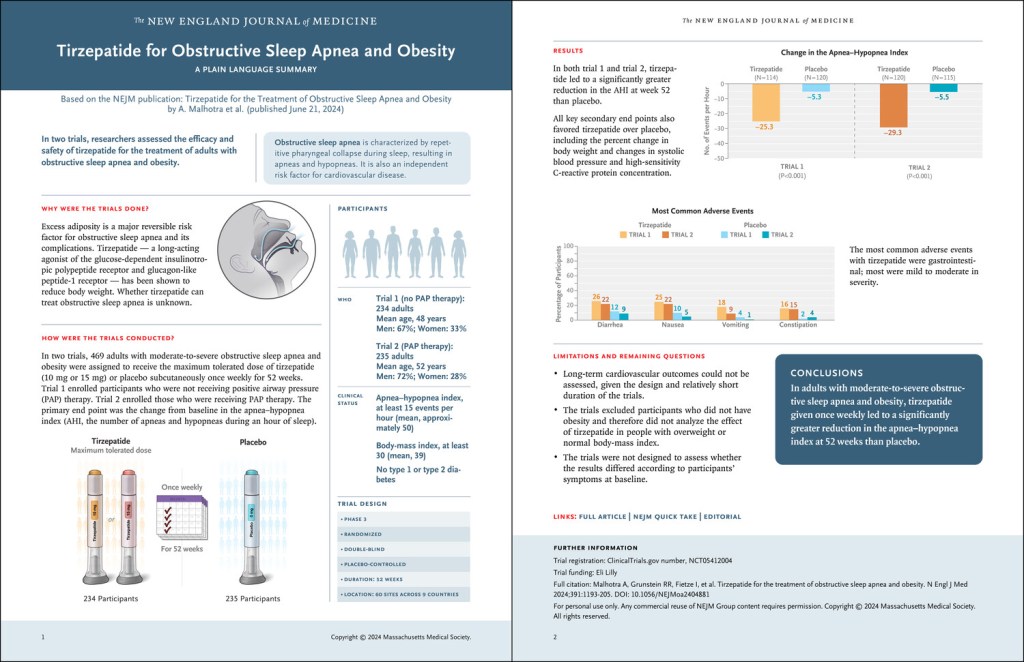
Mounjaro (tirzepatide), a GLP-1 medication, not only promotes weight loss and is an excellent treatment for diabetes, it has now been shown to be an alternative treatment for obstructive sleep apnea.
“Excess adiposity should be confirmed by at least one other anthropometric criterion (eg, waist circumference) or by direct fat measurement when available. However, in people with substantially high BMI levels (ie, >40 kg/m2) excess adiposity can be pragmatically assumed
People with confirmed obesity (that is, with clinically documented excess adiposity) should then be assessed for possible clinical obesity based on findings from medical history, physical examination, and standard laboratory tests…”


https://www.thelancet.com/journals/landia/article/PIIS2213-8587(24)00316-4/abstract
How the brain gets rid of its chemical waste through the glymphatics during sleep, via blood vessel oscillations, regulated by norepinephrine. Impeded by Ambien.
• Norepinephrine release from the locus coeruleus drives slow vasomotion in NREM sleep
• Infraslow norepinephrine oscillations control opposing changes in blood and CSF volumes
• Norepinephrine oscillation frequency during NREM sleep predicts glymphatic clearance
• The sleep aid zolpidem suppresses norepinephrine oscillations and glymphatic flow

https://www.cell.com/cell/abstract/S0092-8674(24)01343-6
https://www.science.org/content/article/scientists-uncover-how-brain-washes-itself-during-sleep

Your favorite beverage may be doing serious damage to your health.
Sugar-sweetened beverages may increase your risk for heart disease and type 2 diabetes, new research finds.
Sugary drinks were found to be linked to over 330,000 deaths a year.


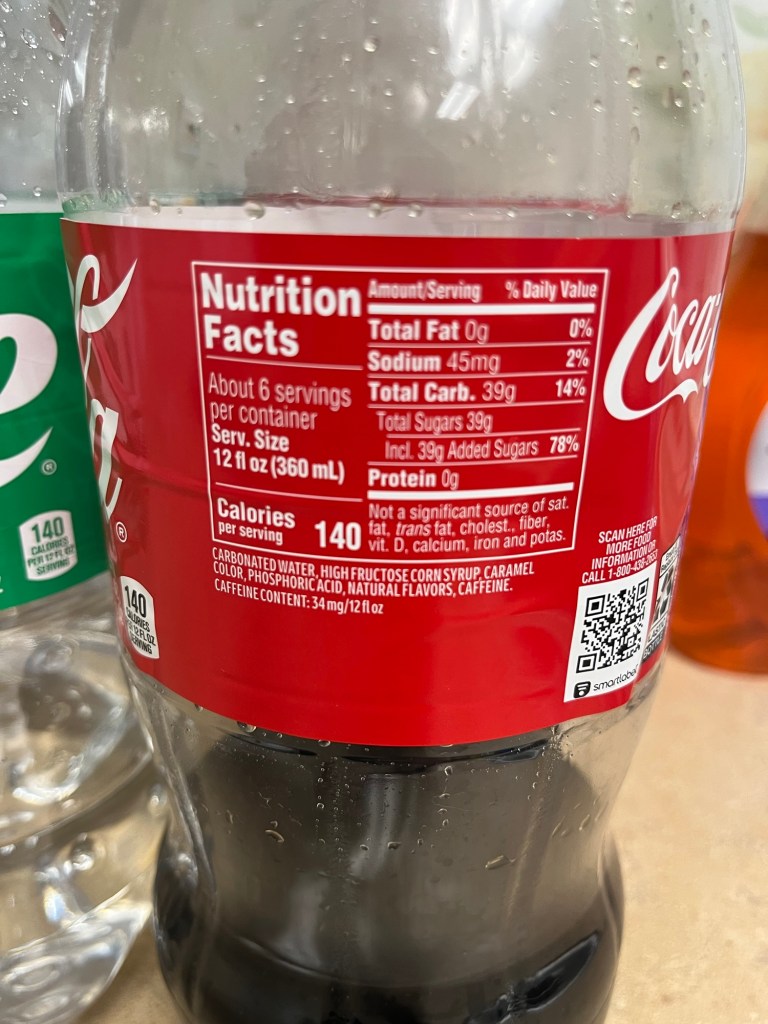
A study published in Nature Medicine analyzed global data on sugar-sweetened beverages (SSBs) consumed around the world from both observational and randomized studies, as well as diabetes and cardiovascular disease prevalence.
On a global level, researchers found that 2.2 million new cases of type 2 diabetes and 1.2 million new cases of heart disease in 2020 were attributable to SSBs—representing about 1 in 10 new type 2 diabetes cases and 1 in 30 new heart disease cases.
https://www.prevention.com/health/a63375234/sugary-drinks-linked-to-death/
Track sleep, heart rate, respiratory rate, temperature, blood oxygen, and sleep duration on your Apple Watch. Here’s how, from iPhone Insider (Dr Bob recommends signing up for lots of great tips and guidance on how to use your Apple Watch and iPhone 🤗
Paywalled Link on iPhone Insider
Why You’ll Love This Tip:
In the latest version of watchOS, the Apple Watch now has a dedicated Vitals app. The Vitals app collects your health data as you sleep and brings it all together in one convenient location. Let’s take a look at the new Apple Watch Vitals app.
- Keep track of your health data in one convenient app.
- Compare your current vitals with the previous week.
How To Use the Vitals App on Apple Watch
System Requirements
This tip works on Apple Watches running watchOS 11 or later. Find out how to update to the latest version of watchOS.
One of the best Apple Watch features is the ability to track your sleeping habits, like your average respiratory rate and heart rate. Now, the Vitals app provides you with a breakdown of your heart rate, respiratory rate, wrist temperature, blood oxygen level, and your sleep duration. All of this data is available in one convenient app. Here’s how to navigate the Vitals app on Apple Watch:
- Open the Vitals app.
- If this is your first time opening this app, you’ll be greeted by an explanation of the app. Scroll down and tap Next.
- You’ll also be asked to enable notifications for this app. Tap Enable or Skip.
- At the top, you’ll see an overall look at your Overnight Vitals. Tap the info icon for more details on what your vitals mean.
- You can scroll down and select More Info.
- This screen will tell you the difference between Typical and Outlier vitals. Tap the X to close this screen.
- Scroll down to see individual breakdowns of each of your vitals. First, is Heart Rate. Like the Overnight Vitals, you can tap the info icon for more details on each Vital.
- Scroll down to see your Respiratory Rate.
- Next, is your Wrist Temperature.
- Continue scrolling to see your Blood Oxygen level.
- Lastly, you can see your Sleep Duration, which is how much sleep you got the night before.
- You can tap the Calendar icon to toggle between Today’s Vitals and the past 7 days’ Vitals.
- This will show you how your vitals last night compare to the previous 7 days.
That’s how to navigate the new Vitals app in watchOS 11. Each of these data points can be found in separate apps, like Heart Rate, Blood Oxygen, and Sleep, so it’s nice to have it all available at a quick glance. The Vitals app will learn you typical sleep behaviors and if there is ever an outlying bit of data, you’ll get a notification to help you improve your sleep.
Which foods should we point the finger at? Due to their saturated fat content, foods such as tropical oils (palm or coconut oil), baked goods, sweets and foods that have been fried all contribute to an increase of ‘bad’ cholesterol.
Processed meats – think sausages, bacon and hot dogs – also contain a high amount of saturated fat. According to one review involving 614,000 participants, each additional 50g (1.8oz) serving of processed meat per day is linked to a 42 per cent higher chance of heart disease.
Then there’s sugar. It also acts like a drug on your liver, encouraging it to produce more LDLs and fewer HDLs. A 15-year study found that participants who took in 25 per cent or more of their daily calories in sugar were more than twice as likely to die from heart disease, with cholesterol playing a key role.
Dover office open at 8 AM and Milford at 10 AM for in-person and telemedicine visits
Roads still quite snowy this Tuesday morning, so please be safe and take your time traveling. Only go out if you must. Check with DelDOT for up-to-date travel information.
Please use the MyChart patient portal if you need to change your appointment or to request refills.
Link to RadarScope app, Dr Bob’s favorite Weather Radar App
Here’s a RadarScope shot of Snowmageddon from Monday, Jan 6 🥶

Mounjaro just approved for Sleep Apnea
“IF YOU TAKE a GLP-1 agonist like Ozempic or Zepbound, you can see changes to your waistline and your blood sugar within weeks. What might be less obvious is how the drug is affecting your brain. Research suggests these popular weight-loss medications can influence everything from daily behavior to risk of age-related memory loss, and neuroscientists are working overtime to discover exactly how these drugs affect the brain.

“It is a hot topic,” says Kevin Williams, Ph.D., a neuroscientist at the University of Texas Medical Branch. “If you can understand how these drugs are accessing the brain and where they are acting, then potentially that could guide future drug development to be able to better target these regions.”
https://www.menshealth.com/health/a63249412/what-ozempic-does-to-your-brain/


 CNMRI: Neurology, Sleep Medicine, MRI