Category Archives: healthcare

Mastering Sleep

A Deep Dive into Cognitive Behavioral Therapy for Insomnia

Summary of a podcast by Dr Peter Attia and Ashley Mason

Introduction

Ashley Mason, PhD, is an Associate Professor at UCSF, leading the Sleep, Eating, and Affect (SEA) Lab and directing the COAST Center. Her work focuses on non-pharmacologic treatments for mood, sleep, and eating disorders, with a central focus on cognitive behavioral therapy for insomnia (CBT-I). In a conversation that serves as a master class, Dr. Mason breaks down the science, structure, and strategies of CBT-I—an intervention she champions as life-changing and highly effective.


What Is Insomnia?

• Definition: Chronic sleep issues persisting >3 months, causing distress or functional impairment.

• Prevalence: Affects 5–10% of adults at any time; 90% will experience it episodically.

• Diagnosis: No lab test—diagnosed clinically based on history and pattern.


The CBT-I Approach

Dr. Mason’s clinical model centers on five pillars:

1. Stimulus Control: Bed = sleep (and sex) only. No TV, phones, or reading.

2. Time in Bed Restriction: Match time in bed to actual sleep ability + 30 mins.

3. Cognitive Restructuring: Reframe catastrophic thoughts around sleep.

4. Relaxation Techniques: Focused body scans, progressive muscle relaxation.

5. Sleep Hygiene: Regulate light, temperature, caffeine, and bedtime habits.


How Insomnia Starts—and Stays

• Predisposing Factors: Genetic tendencies (e.g., light sleeper, high anxiety).

• Precipitating Events: Life stressors (divorce, job loss) trigger acute insomnia.

• Perpetuating Behaviors: Naps, sleeping in, screen use in bed, and inconsistent schedules prolong it.

Dr. Mason intervenes not at the origin, but at the behaviors keeping insomnia alive.


Tools and Tactics

• Scheduled Worry Time: Set a daily time to worry—offload anxiety from bedtime.

• Sleep Diaries: Track sleep patterns, test interventions, and calculate efficiency.

• A/B Testing: Isolate single variables (e.g., blue light glasses) for 2 weeks to test impact.


Key Sleep Hygiene Tips

• Consistent Wake Time: More critical than bedtime. No sleeping in.

• Temperature: Cool room (mid-60s°F); warm hands/feet to fall asleep.

• Fluid Intake: Reduce liquids after dinner to minimize night awakenings.

• Alcohol/Caffeine: No caffeine after 11 A.M.; no alcohol during CBT-I.


Medication and Supplement Use

• Avoid melatonin unless clearly indicated (e.g., beta blocker use).

• Eliminate sleep medications gradually with precision and physician support.

• Avoid rotating OTC and prescription meds—standardize and stabilize.


CBT-I Implementation at UCSF

• Program Structure: Intake → 5 weekly group sessions → follow-up.

• Group Format: 8 patients per cohort; group dynamic enhances adherence.

• Telemedicine: Fully remote access for California patients.


The Role of Digital Tools and AI

• Current apps show moderate promise, but personalization and accountability are challenges.

• Dr. Mason supports the development of AI-assisted programs (e.g., Rest) to democratize CBT-I.


Additional Sleep Disruptors to Rule Out

• Sleep Apnea / RLS: Screen and refer before starting CBT-I.

• Medication Side Effects: Some blood pressure meds suppress melatonin.


Practical Behavioral Advice

• Avoid Napping: Unless >80 years old, limit to 25 minutes max.

• Middle-of-the-Night Awakenings: Leave bed, do boring (non-stimulating) tasks until sleepy again.

• Social Jet Lag: Never sleep in two days in a row; choose which weekend day to feel rested.


Sleep, Anxiety, and the Cognitive Link

• Track belief in distressing thoughts across the day—most lose power by afternoon.

• CBT-I reframes distorted sleep-related beliefs, improving both sleep and mood.


Thermal Interventions and Future Research

• Sauna: May help some; trial shows promise combining heat therapy + CBT-I.

• Cold Plunge: Discouraged before bed—raises core temp post-exposure.


Takeaway

“You don’t have to know what caused your insomnia. Just do the treatment. It works when you do it.” – Dr. Ashley Mason

CBT-I is among the most effective psychological treatments available, with 70% of patients achieving clinically meaningful results. While adherence is essential, the payoff is substantial—better sleep, improved functioning, and often, life transformation. No one should have to suffer from insomnia. Access may be challenging, but tools exist—from books to digital apps—that can initiate recovery.


Recommended Resources

• Quiet Your Mind and Get to Sleep by Rachel Manber & Colleen Carney

• Sleep diaries (paper preferred)

• Society of Behavioral Sleep Medicine directory

• Rest (AI-supported CBT-I app in development)

Start now. It won’t be easy, but it will be worth it.

Medical Aid in Dying: Insights from Both Sides of the Stethoscope

What does it mean to make compassionate, informed end-of-life choices?

In this powerful episode of Delaware Health Care Reality, host Nicholas Biasotto, DO, leads a discussion on this complex and emotional topic. Guests Robert Varipapa, MD advocating in favor of MAID and patient autonomy, and Michael Vest, MD, a Critical Care specialist, presenting concerns against MAID legalization, debate Delaware’s proposed legislation, which could make it the 12th state to allow Medical Aid in Dying.

The three most frequently reported end-of-life concerns were loss of autonomy (92%), decreasing ability to participate in activities that made life enjoyable (88%), and loss of dignity (64%).

The conversation covers patient autonomy, palliative care, hospice support, and mental health resources. They also examine data from Oregon’s long-standing law and the ‘slippery slope’ argument (which has not turned out to be an issue.)

Medical Aid in Dying: Insights from Both Sides of the Stethoscope

A Transcript of Dr Varipapa’s introductory remarks with references and links is also available

Delaware Online

Dr Varipapa’s opinion piece on medical aid in dying (MAID) got published in Delaware Online.

https://www.delawareonline.com/story/opinion/2025/02/07/pass-end-of-life-legislation-in-delaware-opinion/78215409007/

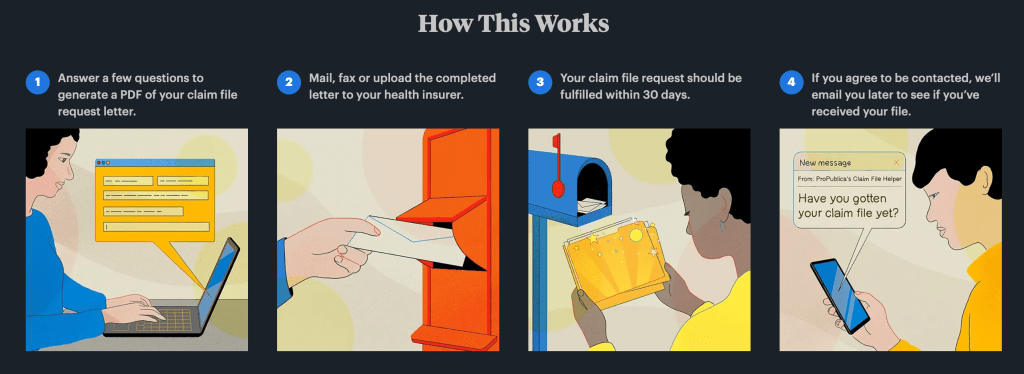
Find out why your health insurer denied your claim

What’s a Claim File? Why Should I Request One?

A claim file is a collection of the information your insurer used to decide whether it would pay for your medical treatment or services. Most people in the U.S. facing a denial have the right to request their claim file from their insurer. It can include internal correspondence, recordings of phone calls, case notes, medical records and other relevant information.

Information in your claim file can be critical when appealing denials. Some patients told us they received case notes showing that their insurer’s decision was the outcome of cost-cutting programs. Others have gotten denials overturned by obtaining recordings of phone calls where company staff introduced errors into their cases.

https://projects.propublica.org/claimfile/

It Pays to Shop Around for Health Care

There is a wide variation in health care costs, whether it’s imaging, prescription costs or even routine care.

For example, an MRI scan of the lumbar spine (low back area) costs around $277 at our facility versus $767 at Bayhealth (that’s almost 3 times more!)

Take a look at Delaware’s ‘CostAware’ for more pricing information. You’ll be surprised at the differences (not unusual for hospital facilities to be 3 to 6 times more than outpatient centers!)

https://costaware.dhss.delaware.gov: It Pays to Shop Around for Health Care

Home Care Resources

Are there programs in Delaware that will allow me to hire my own attendant?
https://dhss.delaware.gov/dsaapd/faq_attendant.html

Can I get paid for being a caregiver for a family member or friend?
https://dhss.delaware.gov/dsaapd/faq_attendant2.html

Delaware Division of Aging Contact Information
Phone: 1-800-223-9074
Email: DelawareADRC@delaware.gov

https://dhss.delaware.gov/dsaapd/contact.html

Long Term Care Medicaid Programs
https://dhss.delaware.gov/dmma/ltcmedicaid.html

Medicaid and veterans programs can help alleviate the financial burden of family caregiving
https://www.aarp.org/caregiving/financial-legal/info-2017/you-can-get-paid-as-a-family-caregiver.html

★ Delaware Medicaid & Medical Assistance

Understanding Long-Term Care Insurance
https://www.aarp.org/caregiving/financial-legal/info-2021/understanding-long-term-care-insurance.html

Long-Term Care Cost Calculator
https://www.aarp.org/caregiving/financial-legal/long-term-care-cost-calculator/?cmp=RDRCT-672c8608-20210611

Why would they do this 🤬

This program should be expanded and not eliminated!

“Senate and House Republicans told Peter Sullivan of Axios that if they regain control of the government, they will work to get rid of the provision in the Inflation Reduction Act that permits the government to negotiate with pharmaceutical companies over drug prices.

Negotiations on the first ten drugs, completed in August, will lower the cost of those drugs enough to save taxpayers $6 billion a year, while those enrolled in Medicare will save $1.5 billion in out-of-pocket expenses.”

https://heathercoxrichardson.substack.com/p/september-18-2024

Sort out your life! 100 tiny tricks

Fun list to check out. This one stuck out for me:

Try Coffee Planking
“Every morning I get up and make coffee for my wife and me. One cup takes one minute 18 seconds to brew, and every morning for the last 12 months I have planked for this period. Simple thing, using the dead time.”

Sort out your life! 100 tiny tricks to help with everything from digital overwhelm to lumpy sugar and unpaid bills

https://www.theguardian.com/lifeandstyle/article/2024/sep/03/sort-out-your-life-100-tiny-tricks-to-help-with-everything-from-digital-overwhelm-to-lumpy-sugar-and-unpaid-bills

Kamala Harris’ healthcare policy positions

Here is a look at where Ms. Harris stands on healthcare policy issues

1. Reproductive health rights are likely to be a cornerstone of Ms. Harris’ campaign, according to KFF Health News.

2. Mergers and Acquisitions: Ms. Harris strongly opposed healthcare consolidation and prosecuted numerous industry players for alleged fraud or antitrust violations, according to The New York Times.

3. Ms. Harris proposed her own “Medicare for All” plan. In a departure from Mr. Sanders, the proposal called for a 10-year phase-in period and would allow private insurers to compete with a government-led system. 

4. Ms. Harris has advocated for student loan debt forgiveness during her time as California attorney general and as vice president, particularly for those working in public service sectors such as education, law enforcement and healthcare.

5. Ms. Harris has advocated for investments to address the nation’s maternal health crisis and reduce health inequities. In 2022, she unveiled the administration’s Blueprint for Addressing the Maternal Health Crisis.

6. In April, Ms. Harris announced two final rules that set minimum staffing requirements for long-term care facilities and at-home services, and require facilities to have a registered nurse on site 24/7.

https://www.beckershospitalreview.com/hospital-management-administration/kamala-harris-healthcare-policy-positions-6-notes.html