Author Archives: drrjv

Unknown's avatar

About drrjv

👴🏻📱🍏🧠😎 Pop Pop 👴🏻, iOS 📱 Geek, cranky 🍏 fanatic, retired neurologist 🧠 Biased against people without a sense of humor 😎

Quick Note: iPhone and iPad usage reduces cognitive decline?

“Engagement with digital technology was associated with a 58 percent reduced risk of cognitive impairment in people middle-aged and older, according to a study in the journal Nature Human Behavior.”

https://www.washingtonpost.com/wellness/2025/05/26/seniors-digital-technology-cognitive-impairment/

Solution for Insomnia 😴

Sound Therapy: Sleep on Apple Music

In this playlist, the addition of delta auditory beats or pink noise may help you find a deeper and better sleep.

“Sound Therapy” is a new audio wellness collection on Apple Music that blends special sound waves and auditory beats with your favorite tracks to encourage therapeutic listening—all without sacrificing the integrity of the music.

To get the most out of your listening experience, it’s recommended that you listen for at least 20 minutes in a quiet environment or with headphones.”

Discover the profound significance of waking up 3 AM to 5 AM

Learn how ancient Buddhist teachings guide us to use these early hours for self-reflection, mindfulness, and spiritual awakening. By understanding the deeper meaning of this time, we can cultivate inner peace, clarity, and a deeper connection to the universe.

Four transformative practices:

  1. Finding stillness through silent meditation
  2. Uplifting your spirit with gratitude and positive affirmations
  3. Purifying your body with warm water and intention and
  4. Reconnecting with nature by stepping outside

How to Set Up Sleep in the Health App

Thanks to iPhone Insider Tip of the Day

Why You’ll Love This Tip

The Health app now allows you to set up a Sleep Schedule that works with your Sleep Focus on iPhone to help you get a good night’s sleep. Find out how to set up Sleep in the Health app.

  • Go to bed on time with a bedtime reminder on your iPhone.
  • Get a healthy amount of sleep by setting up a Sleep Schedule and Sleep Goal on your iPhone.

How to Set Up Sleep in the Health App

System Requirements

This tip was performed on an iPhone 16 running iOS 18.3.1. Find out how to update to the latest version of iOS.

You can use the Sleep in the Health app to improve your sleep routine. Here’s how to use Sleep to set up Sleep Goals on your iPhone, change Sleep Goals, set up a Sleep Schedule, set a Bedtime Reminder and wakeup alarm, and more. Now, here’s how to set up Sleep in the Health app:

  1. Open the Health app.
  2. Tap the Browse tab.
    img_5194.jpeg
  3. Scroll down and tap Sleep.
    tap sleep in health app
  4. If this is your first time accessing the Sleep settings, tap Get Started to set up your Sleep Schedule.
  5. Tap You do not have a Sleep schedule under Full Schedule & Options.
    tap you do not have a sleep schedule
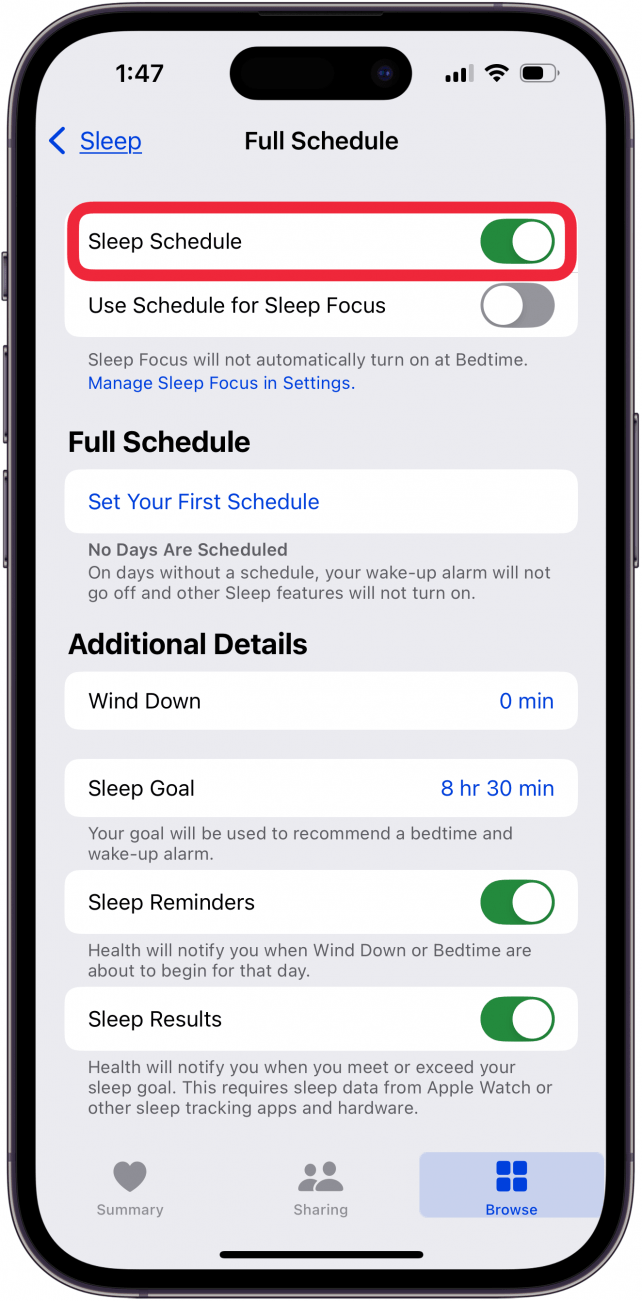
  6. Toggle on Sleep Schedule.
    toggle on sleep schedule
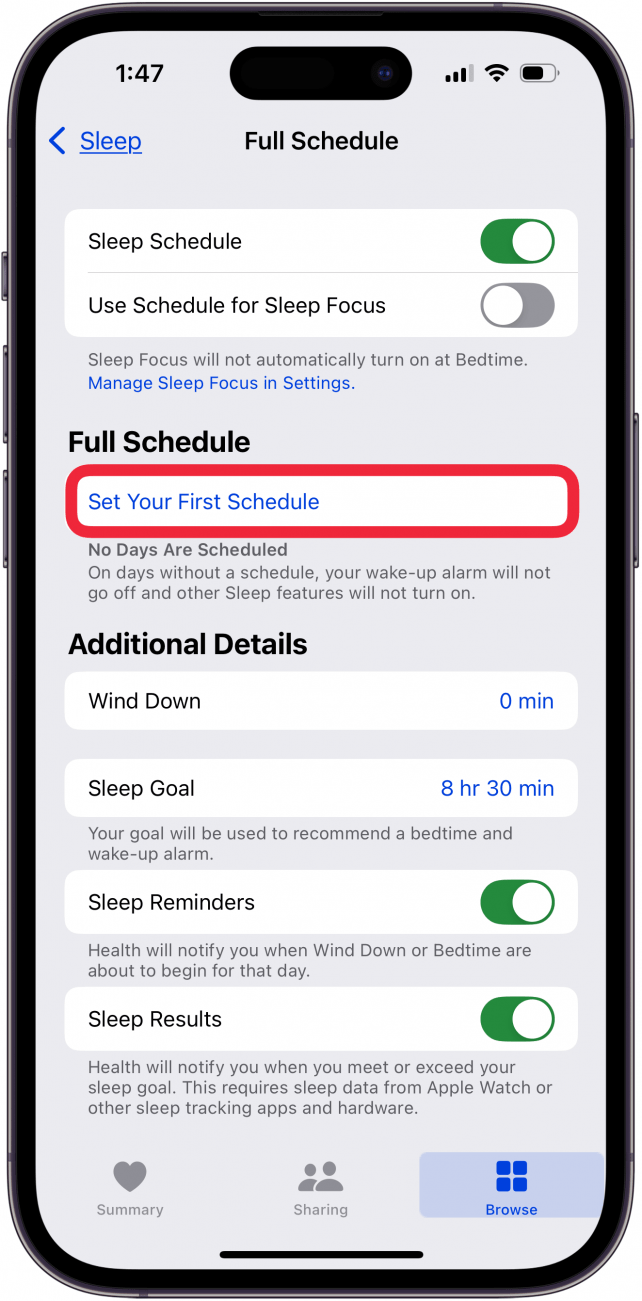
  7. Tap Set Your First Schedule.
    tap set your first schedule
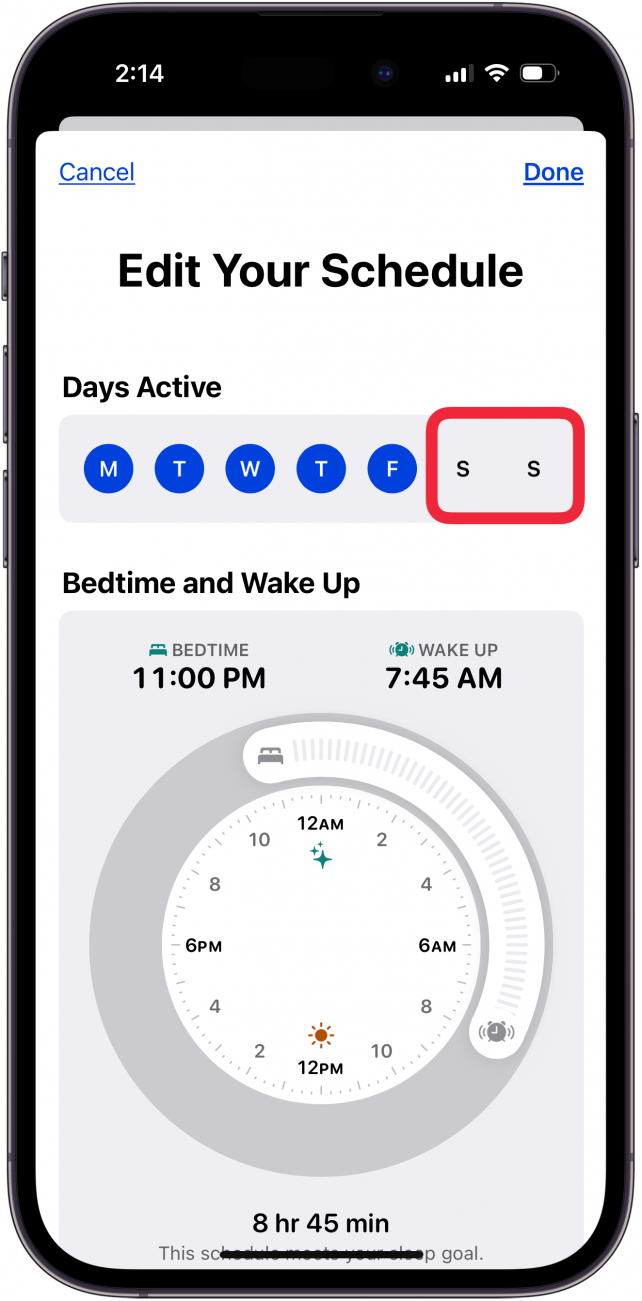
  8. Tap the days you DON’T WANT included in your sleep schedule.
    tap days you don't want included in sleep schedule
  9. To set your bedtime and wake-up times, drag the Bedtime and Wakeup sliders to when you want to go to sleep and wake up.
    adjust bedtime and wakeup sliders
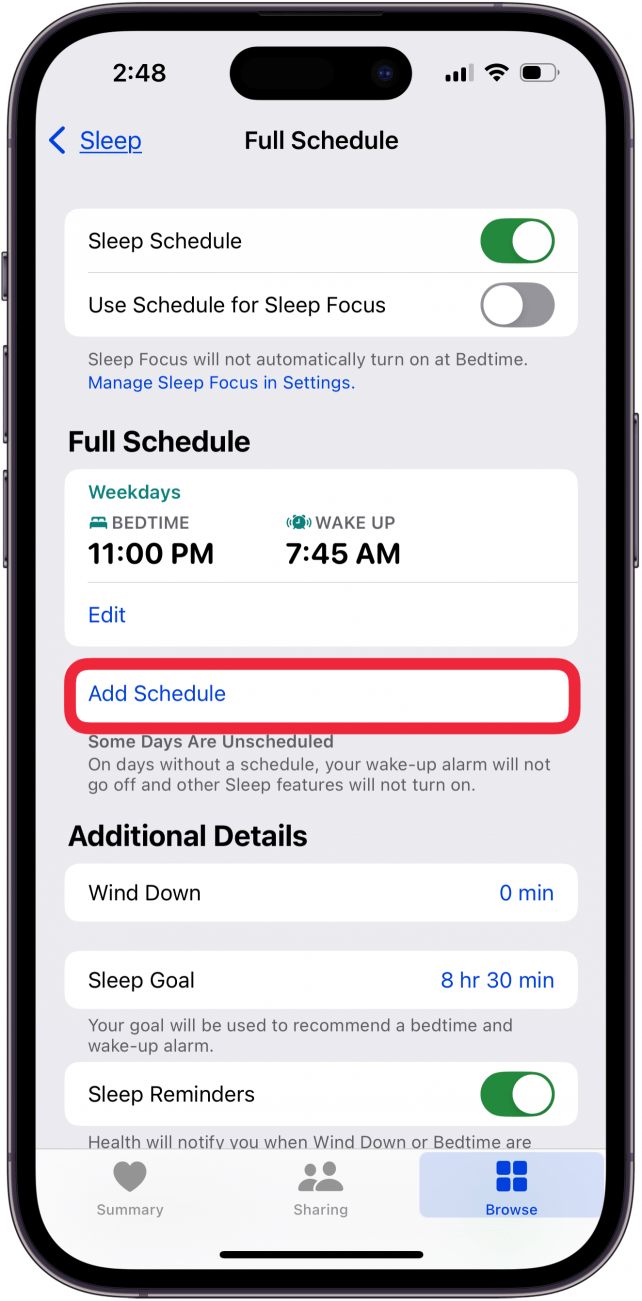
  10. If you have multiple sleep schedules, you can tap Add Schedule.
    tap add schedule
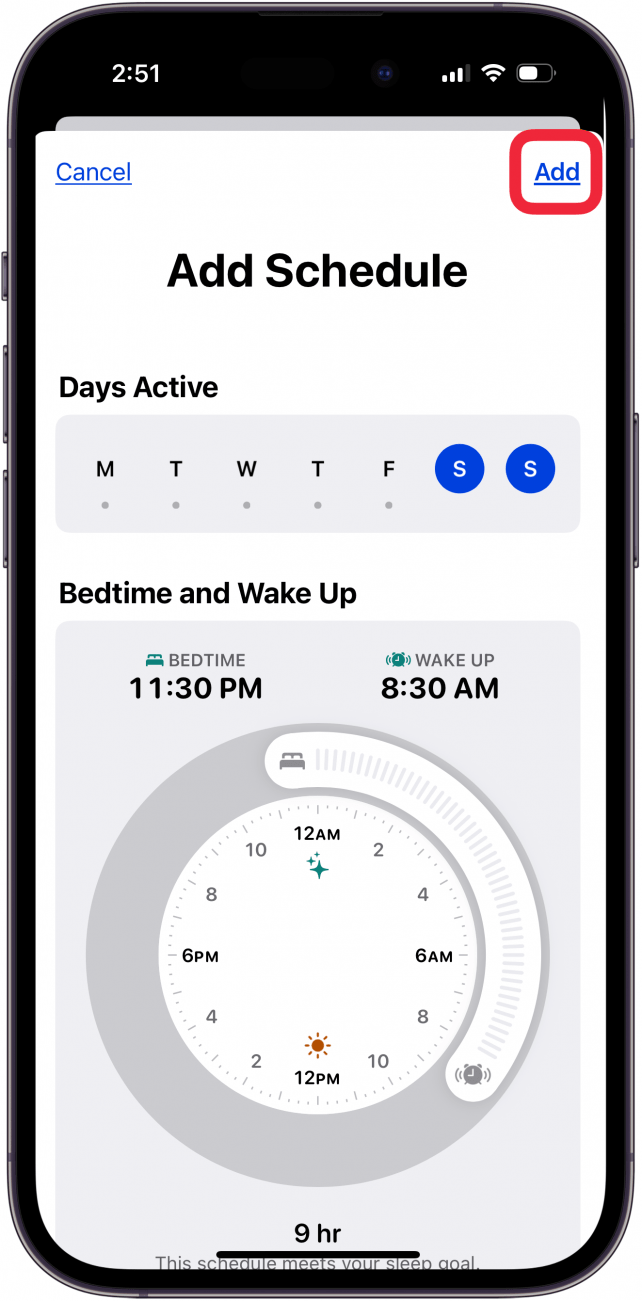
  11. The unscheduled days (in this case Saturday and Sunday) will be highlighted, and you can use the Bedtime and Wakeup sliders to set the sleep schedule as before, and tap Add.
    edit second sleep schedule and tap add
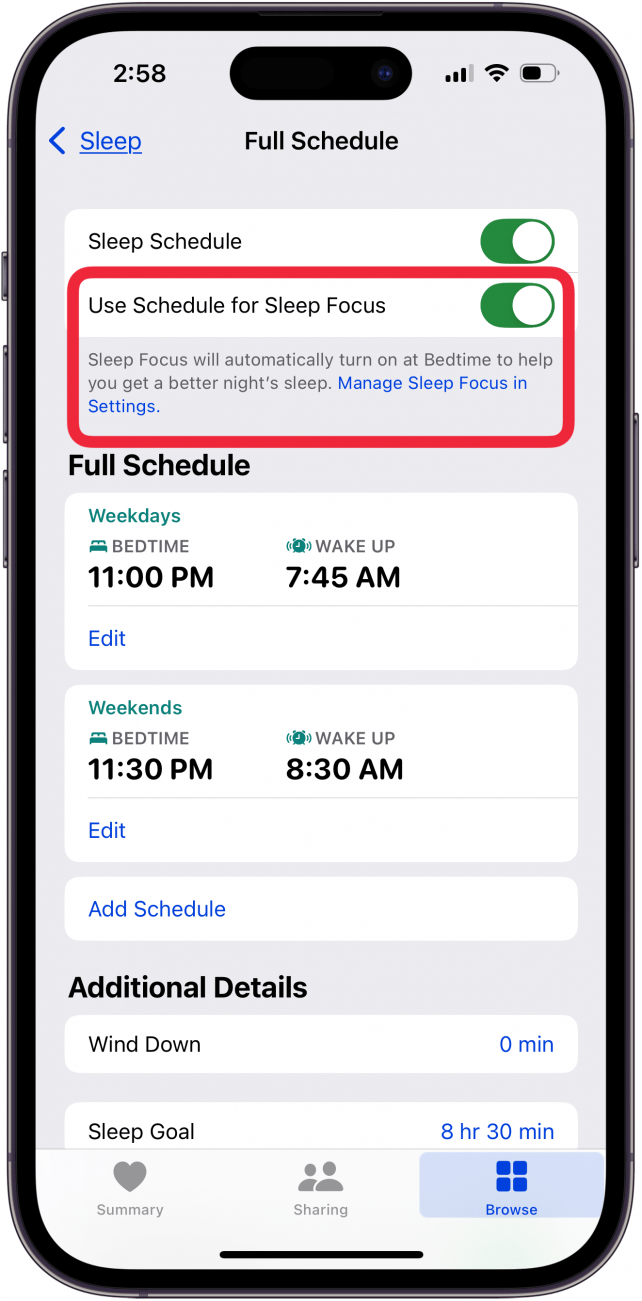
  12. Toggle on Use Schedule for Sleep Focus to have your Sleep Focus turn on automatically at Bedtime. If this is your first time setting up Sleep, this menu may look different than the screenshot below.
    toggle on use schedule for sleep focus
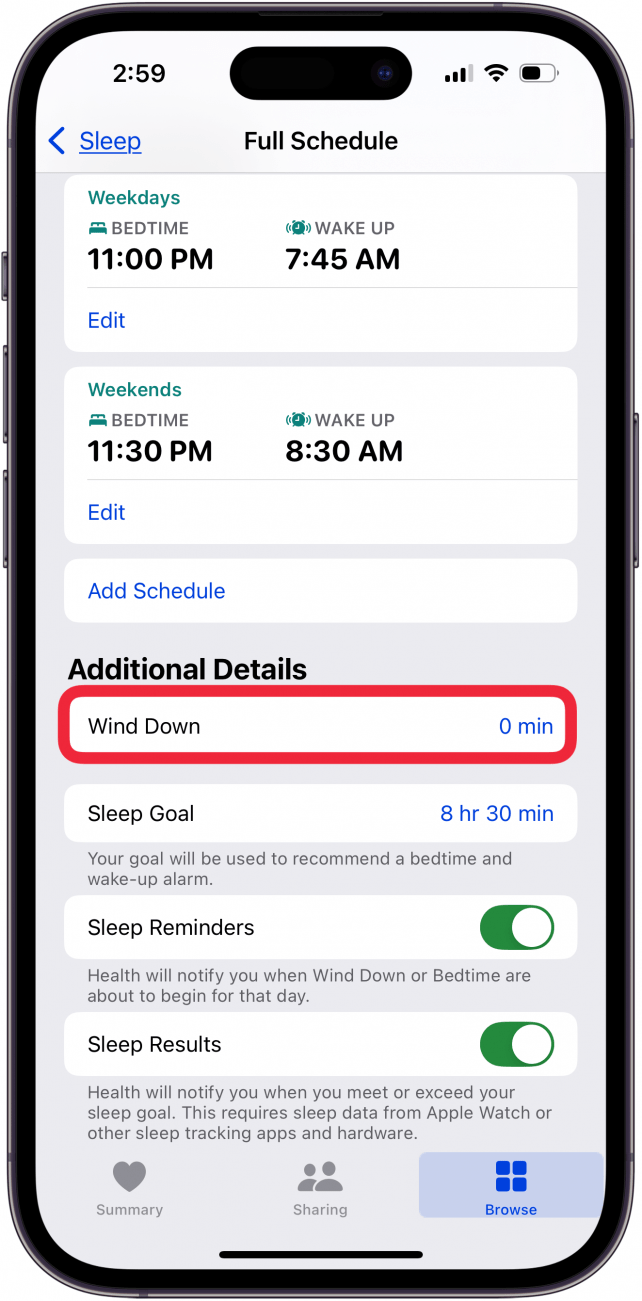
  13. Tap Wind Down under Additional Details.
    tap wind down
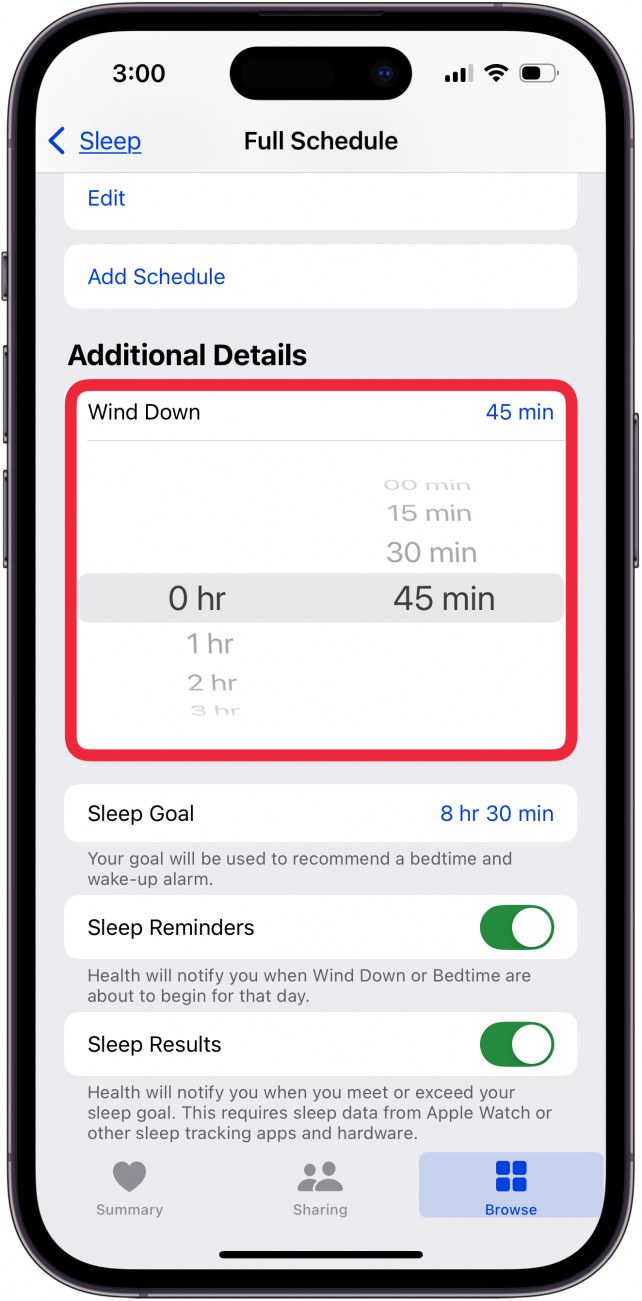
  14. Scroll to set how long before bed you would like to start winding down. If this is your first time setting a Wind Down time, this menu may look different than the screenshot below.
    select wind down time
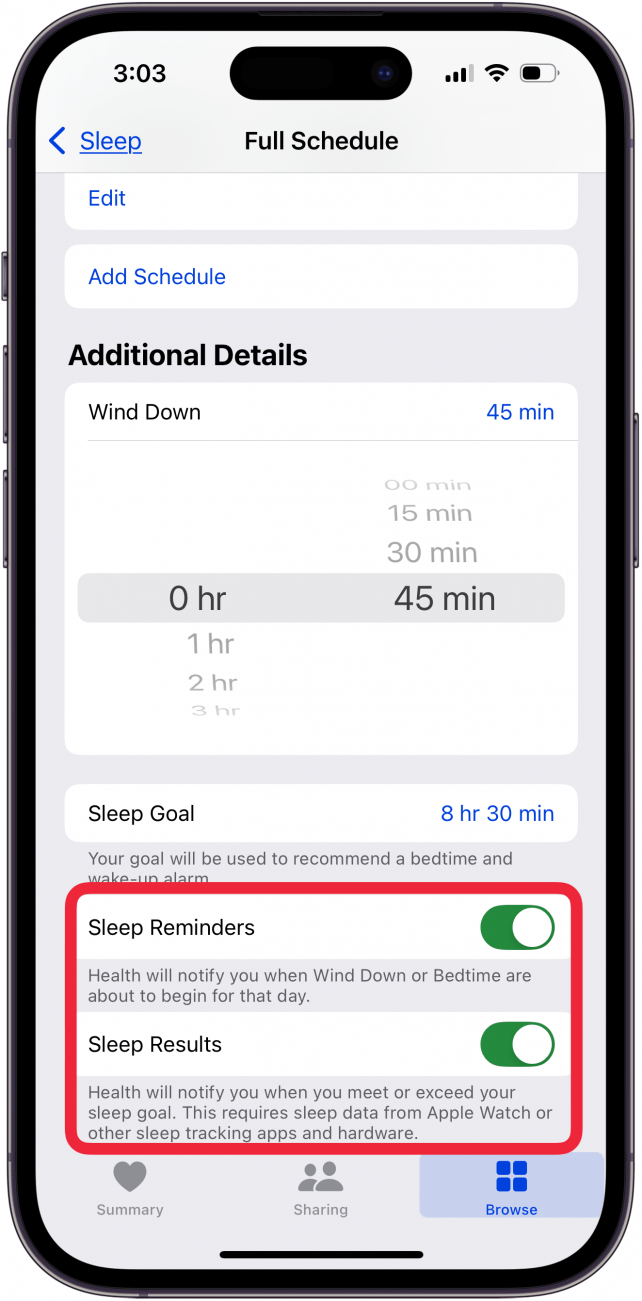
  15. You can also toggle on Sleep Reminders and Sleep Results
    toggle on sleep reminders and sleep results if desired
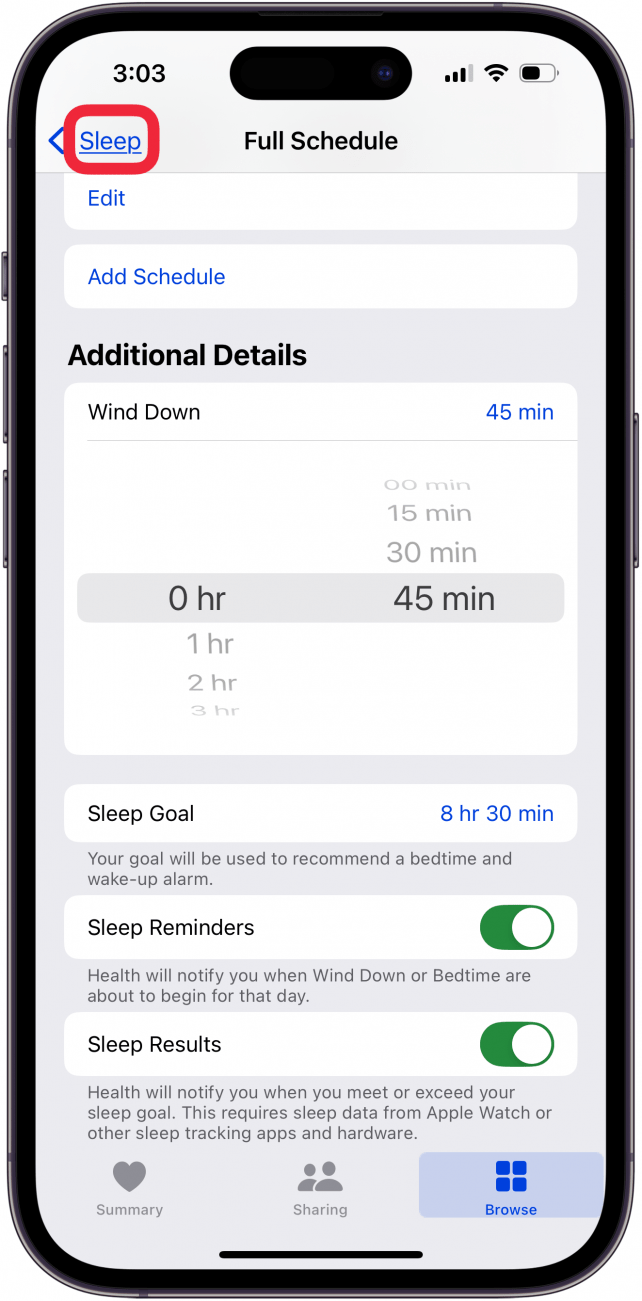
  16. Tap Sleep to return to the previous page.
    tap sleep
  17. If you ever want to edit your Sleep Schedule, simply repeat steps 1-3, and then scroll down and find Your Schedule. Then, tap Edit under Next to only edit your next Sleep Schedule.
    tap edit to change sleep goal iphone
  18. Tap Full Schedule & Options to edit your full schedule, as well as adjust settings like Wind Down time and your Sleep Goal.
    tap full schedule and options to change sleep goal iphone

Now you’ve set up Sleep in the Health app! You can adjust your schedule whenever you want, and if you have an Apple Watch, you can see data like respiratory rate, heart rate, and how many hours of sleep you are averaging.

Think Twice before you get that CAT Scan

CT scans, a widely used medical imaging technology to diagnose diseases, may be more harmful than previously thought, and account for about 5% of new cancer cases annually in the U.S. population, according to new research led by UCSF scientists. 

That puts CT (computed tomography) scans — which expose patients to ionizing radiation, a known carcinogen — on par with alcohol consumption and excess body weight in terms of contribution to cancer risk, according to the study, which is slated for publication Monday in JAMA Internal Medicine.

While the risk of radiation-induced cancer from one CT scan is low, people who get frequent CTs due to chronic conditions like Crohns should be aware of the benefits and risks of the procedure, said first author Dr. Rebecca Smith-Bindman, a UCSF radiologist and professor of epidemiology. 

“The goal is not to scare patients, but to help them understand going forward they need to think about every time a CT is suggested,” Smith-Bindman said. “Do they need it? Do they understand why it’s done and work with their physician? Is this really a test I need now? Maybe it’s a test I can postpone.”

https://apple.news/AwiJRBSYbSLeAql6SJlsQmw

Optimal dietary patterns for healthy aging

A recent important study published in Nature Medicine examines the impact of long-term adherence to various dietary patterns on healthy aging.

Utilizing data from the Nurses’ Health Study and the Health Professionals Follow-Up Study – over 100K people in their early fifties followed for 30 years – in the end, only 23% of them were free of 11 chronic diseases!

Primary Message: Eat well and believe the science.

Study Parameters

Healthy Aging
Better Cognitive Function
Better Physical Function
Better Mental Health
Free from Chronic Disease
Survival Past Age 70

Key Findings:

Dietary Patterns: Higher adherence to healthful dietary patterns, such as the Alternative Healthy Eating Index (AHEI), was associated with increased odds of healthy aging. Participants in the highest quintile of AHEI adherence had an 86% greater likelihood of aging healthily compared to those in the lowest quintile.

Beneficial Foods: Increased consumption of fruits, vegetables, whole grains, unsaturated fats, nuts, legumes, and low-fat dairy products correlated with better aging outcomes.

Not surprisingly, healthy options include vegetables, fruits, unsaturated fats, nuts, legumes, omegas-3s and fish. And surprisingly (you’ll like this!), wine, fast food, fried food for better chances of brain health & longer life!

Detrimental Foods: Higher intakes of trans fats, sodium, sugary beverages, and red or processed meats were inversely associated with healthy aging.

Unhealthy food, as expected, included trans fats, total meats, red meat, butter, margarine, snacks, sodium, processed meats, sweets and desserts, sugary juices, total alcohol and refined grains. Surprisingly, potatoes & starchy vegetables, low energy drinks were net negatives

Click to access full study

Mastering Sleep

A Deep Dive into Cognitive Behavioral Therapy for Insomnia

Summary of a podcast by Dr Peter Attia and Ashley Mason

Introduction

Ashley Mason, PhD, is an Associate Professor at UCSF, leading the Sleep, Eating, and Affect (SEA) Lab and directing the COAST Center. Her work focuses on non-pharmacologic treatments for mood, sleep, and eating disorders, with a central focus on cognitive behavioral therapy for insomnia (CBT-I). In a conversation that serves as a master class, Dr. Mason breaks down the science, structure, and strategies of CBT-I—an intervention she champions as life-changing and highly effective.


What Is Insomnia?

• Definition: Chronic sleep issues persisting >3 months, causing distress or functional impairment.

• Prevalence: Affects 5–10% of adults at any time; 90% will experience it episodically.

• Diagnosis: No lab test—diagnosed clinically based on history and pattern.


The CBT-I Approach

Dr. Mason’s clinical model centers on five pillars:

1. Stimulus Control: Bed = sleep (and sex) only. No TV, phones, or reading.

2. Time in Bed Restriction: Match time in bed to actual sleep ability + 30 mins.

3. Cognitive Restructuring: Reframe catastrophic thoughts around sleep.

4. Relaxation Techniques: Focused body scans, progressive muscle relaxation.

5. Sleep Hygiene: Regulate light, temperature, caffeine, and bedtime habits.


How Insomnia Starts—and Stays

• Predisposing Factors: Genetic tendencies (e.g., light sleeper, high anxiety).

• Precipitating Events: Life stressors (divorce, job loss) trigger acute insomnia.

• Perpetuating Behaviors: Naps, sleeping in, screen use in bed, and inconsistent schedules prolong it.

Dr. Mason intervenes not at the origin, but at the behaviors keeping insomnia alive.


Tools and Tactics

• Scheduled Worry Time: Set a daily time to worry—offload anxiety from bedtime.

• Sleep Diaries: Track sleep patterns, test interventions, and calculate efficiency.

• A/B Testing: Isolate single variables (e.g., blue light glasses) for 2 weeks to test impact.


Key Sleep Hygiene Tips

• Consistent Wake Time: More critical than bedtime. No sleeping in.

• Temperature: Cool room (mid-60s°F); warm hands/feet to fall asleep.

• Fluid Intake: Reduce liquids after dinner to minimize night awakenings.

• Alcohol/Caffeine: No caffeine after 11 A.M.; no alcohol during CBT-I.


Medication and Supplement Use

• Avoid melatonin unless clearly indicated (e.g., beta blocker use).

• Eliminate sleep medications gradually with precision and physician support.

• Avoid rotating OTC and prescription meds—standardize and stabilize.


CBT-I Implementation at UCSF

• Program Structure: Intake → 5 weekly group sessions → follow-up.

• Group Format: 8 patients per cohort; group dynamic enhances adherence.

• Telemedicine: Fully remote access for California patients.


The Role of Digital Tools and AI

• Current apps show moderate promise, but personalization and accountability are challenges.

• Dr. Mason supports the development of AI-assisted programs (e.g., Rest) to democratize CBT-I.


Additional Sleep Disruptors to Rule Out

• Sleep Apnea / RLS: Screen and refer before starting CBT-I.

• Medication Side Effects: Some blood pressure meds suppress melatonin.


Practical Behavioral Advice

• Avoid Napping: Unless >80 years old, limit to 25 minutes max.

• Middle-of-the-Night Awakenings: Leave bed, do boring (non-stimulating) tasks until sleepy again.

• Social Jet Lag: Never sleep in two days in a row; choose which weekend day to feel rested.


Sleep, Anxiety, and the Cognitive Link

• Track belief in distressing thoughts across the day—most lose power by afternoon.

• CBT-I reframes distorted sleep-related beliefs, improving both sleep and mood.


Thermal Interventions and Future Research

• Sauna: May help some; trial shows promise combining heat therapy + CBT-I.

• Cold Plunge: Discouraged before bed—raises core temp post-exposure.


Takeaway

“You don’t have to know what caused your insomnia. Just do the treatment. It works when you do it.” – Dr. Ashley Mason

CBT-I is among the most effective psychological treatments available, with 70% of patients achieving clinically meaningful results. While adherence is essential, the payoff is substantial—better sleep, improved functioning, and often, life transformation. No one should have to suffer from insomnia. Access may be challenging, but tools exist—from books to digital apps—that can initiate recovery.


Recommended Resources

• Quiet Your Mind and Get to Sleep by Rachel Manber & Colleen Carney

• Sleep diaries (paper preferred)

• Society of Behavioral Sleep Medicine directory

• Rest (AI-supported CBT-I app in development)

Start now. It won’t be easy, but it will be worth it.

Medical Aid in Dying: Insights from Both Sides of the Stethoscope

What does it mean to make compassionate, informed end-of-life choices?

In this powerful episode of Delaware Health Care Reality, host Nicholas Biasotto, DO, leads a discussion on this complex and emotional topic. Guests Robert Varipapa, MD advocating in favor of MAID and patient autonomy, and Michael Vest, MD, a Critical Care specialist, presenting concerns against MAID legalization, debate Delaware’s proposed legislation, which could make it the 12th state to allow Medical Aid in Dying.

The three most frequently reported end-of-life concerns were loss of autonomy (92%), decreasing ability to participate in activities that made life enjoyable (88%), and loss of dignity (64%).

The conversation covers patient autonomy, palliative care, hospice support, and mental health resources. They also examine data from Oregon’s long-standing law and the ‘slippery slope’ argument (which has not turned out to be an issue.)

Medical Aid in Dying: Insights from Both Sides of the Stethoscope

A Transcript of Dr Varipapa’s introductory remarks with references and links is also available

Did a new Alzheimer’s drug keep this patient’s brain healthier for longer?

New drugs Leqembi and Kisunla may have a modest benefit, don’t cure Alzheimer’s, have a host of side effects (including brain bleeds), are troublesome to use (require IV infusion or injection) and multiple brain scans and cost 10’s of thousands to administer.

In 2020, Sue Bell became one of the first Alzheimer’s patients in the U.S. to receive the drug now marketed as Leqembi.

Four years later, she and her husband, Ken, halted the treatment. Sue’s Alzheimer’s had reached the point where her taking the drug no longer made sense.

“I think it helped,” says her husband, Ken Bell. “But I’m not sure.”

That sort of uncertainty is common when it comes to Leqembi and Kisunla, two new Alzheimer’s drugs approved since 2023.

https://www.stlpr.org/npr/2025-02-26/did-a-new-alzheimers-drug-keep-this-patients-brain-healthier-for-longer

Delaware Online

Dr Varipapa’s opinion piece on medical aid in dying (MAID) got published in Delaware Online.

https://www.delawareonline.com/story/opinion/2025/02/07/pass-end-of-life-legislation-in-delaware-opinion/78215409007/