In early 2023, Viking started a Phase 1 clinical study on the oral formulation of VK2735. The 28-day study showed that taking oral VK2735 led to noticeable weight loss. Participants who took VK2735 lost up to 5.3% of their body weight. Compared to those who took a placebo (a pill with no medicine), VK2735 users lost up to 3.3% more weight. Even after stopping the medicine, the weight loss effect continued for six more days, with participants losing up to 3.6% more than those on placebo. About 57% of people taking VK2735 lost at least 5% of their body weight in 28 days, while no one in the placebo group did. Viking believes that taking VK2735 for more than 28 days could lead to even more weight loss.
VK2735 also showed good safety and tolerability over the 28 days of daily dosing. Most side effects were mild, with 76% being mild and 24% moderate. For stomach-related side effects, 79% were mild. Some people (14%) had mild nausea, but no one vomited. One person had diarrhea, compared to two people in the placebo group. Overall, there were no significant differences in stomach problems between those taking VK2735 and the placebo. No serious side effects have been reported.
Semaglutide vs Tirzepatide for Weight Loss in Adults With Overweight or Obesity
After a full year of evaluation, patients taking Mounjaro lost 15.3% of their starting weight, compared to almost half of that — 8.3% — while taking Ozempic for 12 months.
“Individuals with overweight or obesity treated with tirzepatide (Mounjaro, Zepbound) were significantly more likely to achieve clinically meaningful weight loss and larger reductions in body weight compared with those treated with semaglutide (Ozempic, Wegovy),” the authors wrote.
In this large clinical analysis of US adults with overweight or obesity who initiated tirzepatide or semaglutide treatment, those receiving tirzepatide were more likely to achieve 5% or greater, 10% or greater, and 15% or greater weight loss and experienced larger reductions in body weight at 3, 6, and 12 months. To our knowledge, this study represents the first clinical comparative effectiveness study of tirzepatide and semaglutide in adults with overweight or obesity.
Want to reduce food cravings, lose weight and improve glucose control?
The GLP-1 Probiotic is formulated with beneficial bacterial strains that naturally increase GLP-1, the ‘un-hunger’ hormone that helps curb cravings and appetite. Presently at the time of this post, the Pendulum Probiotics are the only ones that have had double blind research with publications in peer-reviewed medical journals.
There is also a company webinar that is very informative:
You can also use your FSA or HSA account as payment too. Certainly worth a try if you are serious about your health. More information at the Pendulum Life website:
“Until recently, the dominance of ultra-processed food and alcohol companies has seemed unassailable.
With corporate food engineers cranking out more and more hyper-palatable products, the negative health impacts seemed to only be moving in one direction. The tide might be about to turn.”
TL:DR Mounjaro, Zepbound, Wegovy and Ozempic linked to reduced chance of getting MS!
From the Article:
The use of obesity medications — approved drugs for treating diabetes and promoting weight loss — is associated with a reduced chance of developing multiple sclerosis (MS), according to real-world data from the U.S. Food and Drug Administration (FDA), a study found.
In particular, medicines that activate a receptor called GLP-1, which lowers blood glucose or blood sugar levels, all showed potential protective effects against MS.
“These findings suggest a potential for repurposing these medications for MS,” the researchers wrote.
Obesity is a well-known driver of chronic inflammation in the body, which can help set the stage for the development of MS, an inflammatory disorder affecting the brain and spinal cord.
Research has shown that obesity in early childhood or adolescence increases the risk of MS. It also worsens outcomes for newly diagnosed patients, and is linked to less favorable responses to disease-modifying therapies.
Will neurologists start ordering weight loss drugs?
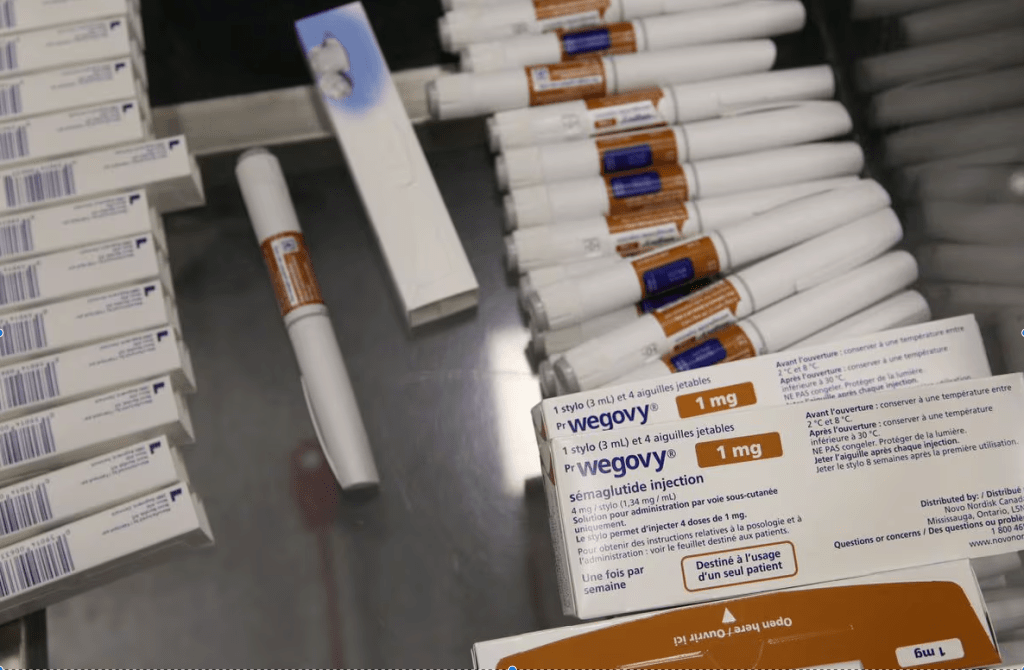
The U.S. Food and Drug Administration approved Novo Nordisk’s (NOVOb.CO), opens new tabweight-loss drug Wegovy on Friday for lowering the risk of stroke and heart attack in overweight or obese adults who do not have diabetes.
Novo’s widely used diabetes drug Ozempic and weight-loss drug Wegovy, both chemically known as semaglutide, belong to a class of drugs called GLP-1 agonists. Originally developed for type 2 diabetes, they also reduce food cravings and cause the stomach to empty more slowly.
Delaware is 43rd among states in the US with 38% of the population considered obese! For comparison, West Virginia is 50th with 41% obese, and Colorado ranked 1st with 25% obese.
GLP-1 medications semaglutide (Ozempic, Wegovy) and tirzepatide (Mounjaro, Zepbound) are expensive treatment options for obesity, usually $1,000 or more per month (although insurers and PBM’s pay less – I’ve heard around $500 +/-) The State of Delaware is currently blaming the expense of these medications on the increase in cost of the State Employee benefit programs.
Not factored in are the savings from complications of diabetes and hypertension and the reduction in cardiovascular and orthopedic disorders (savings which may take years to show up.)
Presently, Delaware has been spending about $2.5 million a month on these drugs – total health plan spending over the first six months is about $15 million, which would equate to $30 million per year!
Delaware chose to cover the drugs last March and is now reassessing whether to make changes to its coverage policies. The State Employee Benefits Committee, which oversees Delaware’s health care plans for state workers and retirees, will be discussing this issue at upcoming meetings on Feb. 20, March 11 and 25 before making a recommendation to the State. Email the benefits committee at sebc@delaware.gov if you would like to comment.
According to a recent NPR story on Delaware Public Media, drugs like Ozempic can help weight loss, but not without ethical and health concerns.
“North Carolina shouldered the cost of the weight loss drug Wegovy for 2,800 state workers in 2021. Last year, that number shot up to 25,000 totaling $100 million.
Last Thursday, the state decided not to pay for it any longer. Celebrities and people like Elon Musk who can afford $1,000 a month for Ozempic and Wegovy can still get them. However, a nurse in North Carolina told The New York Times that finding Wegovy is like winning the lottery.
These Food and Drug Administration-approved, plant-based injectable drugs were initially developed to treat diabetes, but they also help with obesity. But demand for Ozempic and Wegovy’s weight-loss properties rose so high that diabetics had trouble finding them. There aren’t enough chemicals to keep up with the demand, creating a scarcity.”
A preliminary review of side effects from popular drugs used to treat diabetes and obesity shows no link with suicidal thoughts or actions, the U.S. Food and Drug Administration said Thursday.
But the agency also said officials cannot definitively rule out that “a small risk may exist” and that they’ll continue to look into reports regarding more than a dozen drugs, including Ozempic, Wegovy and Mounjaro. Patients taking the drugs should report any concerns to health care providers, the FDA said. https://apnews.com/article/wegovy-ozempic-obesity-suicide-thoughts-fda-fbe7b158e78c199f8f8d3a551dcaa60d



 CNMRI: Neurology, Sleep Medicine, MRI