In this playlist, the addition of delta auditory beats or pink noise may help you find a deeper and better sleep.
“Sound Therapy” is a new audio wellness collection on Apple Music that blends special sound waves and auditory beats with your favorite tracks to encourage therapeutic listening—all without sacrificing the integrity of the music.
To get the most out of your listening experience, it’s recommended that you listen for at least 20 minutes in a quiet environment or with headphones.”
For the 11 years I was practicing general dentistry, about five patients came into my practice each year with severe temporomandibular joint (TMJ) disorders that were impacting their daily lives. This type of jaw pain was debilitating, but I hadn’t learned anything about treating it in dental school. I felt like the medical and dental communities had failed these patients.
Priya Mistry is a jaw expert and treats patients with TMJ.
I wanted to do better for them, so I asked to shadow a TMJ expert. I watched as he evaluated patients’ posture and leg length. He taught me how the jaw — along with the feet, hips, and spine — is essential for posture. His patients told me he had saved their lives because they had so much jaw pain before seeing him.
Related stories
By the end of the first day, I knew I wanted to take over his practice. I had a 2-year-old and a 2-month-old at the time, so he was skeptical. But I worked under him for three years and brought the practice when he retired in 2021. Now, he’s like a second dad to me.
Since then, I’ve learned a lot about jaw health — including that seemingly harmless things can really impact your jaw. Here are five common things you should avoid if you want to foster good jaw health in yourself and your kids.
Avoid resting your head on your hands
Many people rest their heads against their fists when they’re looking at the computer during the day. This puts a lot of lateral pressure on the temporomandibular joint, which is designed mostly for back-and-forth movement. Even 20 minutes here and there adds up and can strain your jaw muscles or joints.
I caution my patients against chewing pens, gum, or fingernails
Humans aren’t meant to be chewing constantly. Chewing on items throughout the day — like pens, fingernails, or gum — means you’re overusing your jaw muscles. You wouldn’t do bicep curls all day, right? Chewing on gum or other items is like doing that for your jaw and can lead to overuse injuries.
Don’t even get me started on popular jaw strengtheners, which people chew on to try to get a more defined jawline. Those things scare me and I would recommend everyone steer clear.
Don’t use your teeth to open things
Lots of people grind their teeth at night without realizing it, which can weaken the teeth. When you use your teeth to tear open a plastic package or anything else, it puts a lot of pressure on the teeth. Sometimes, it’s the straw that breaks the camel’s back, and your tooth can crack or chip.
It’s easier said than done, but try to reduce stress
Lots of TMJ problems happen because people clench or grind their jaws. When we’re emotionally stressed, we clench even more than normal. During the pandemic, referrals to my practice skyrocketed, and my mentor and I fully believed it was because of stress. If possible, try to find ways to reduce and manage your stress and relax your jaw.
I advise parents to wean babies off pacifiers by 6 months
Pacifiers and thumb sticking can cause the mouth, palette, and jaw to grow in all sorts of wrong directions. That’s why I like to see babies stop using pacifiers by 6 months. Pacifiers interrupt healthy tongue posture (in which the tongue is touching the roof of the mouth). That can lead to mouth breathing and other health concerns that could be avoided by kicking the pacifier early.
Jaw health and tongue position can play a huge role in overall health. Taking small actions to take care of your oral health now — and getting help if you experience issues like clicking, popping, or mouth breathing — can help you stay healthy.
In this special episode, Peter addresses the common questions about starting or returning to an exercise routine over the age of 50. Individuals in this age group have frequently reached out with questions about whether it’s too late to start exercising and often express concern over a lack of prior training, a fear of injury, or uncertainty about where to begin.
Fat-free mass (FFM) and physical activity level (PAL) throughout life in females (left) and males (right).
Peter delves into the importance of fitness for older adults, examining all four pillars of exercise, and provides practical advice on how to start exercising safely, minimize injury risk, and maximize potential benefits. Although this conversation focuses on people in the “older” age category, it also applies to anyone of any age who is deconditioned and looking to ease into regular exercise.
While breastfeeding her new baby, she developed intense, unexplained pain that kept getting worse.
Several days after her parents’ departure Lucido stumbled into the bathroom early one morning and unintentionally sat down hard on the toilet. Instantly she felt a sickening shudder in her lower back followed by the sensation of an electric current shooting up her spine. Intense nausea came next. Worried she might pass out from the pain, Lucido lay on the bathroom floor.
Aimee Lucido with her baby, Lyra
In 2018 Columbia University’s Irving Medical Center had launched a program headed by endocrinologist Adi Cohen to recruit, study and treat women with a rare condition called pregnancy- and lactation-associated osteoporosis (PLO).
A severe form of early-onset osteoporosis — osteoporosis that occurs before age 50 — PLO can occur in the late stages of pregnancy or during breastfeeding when the loss of maternal calcium leads to a temporary decrease in bone mineral density. Unlike postmenopausal osteoporosis, which is common and affects about 10 million Americans, PLO is rare, although no one knows how rare.
If you have chronic lower back pain—meaning a nagging ache has persisted for 12 weeks or more—you may be tempted to throw a bunch of Dr. Google remedies into a bag, shake it up, and start drawing at random. Before you go that unscientific—but understandably desperate—route, know this: The World Health Organization (WHO) released guidelines in 2023 that aim to demystify the dizzying array of options that promise to put an end to the hurt.
We asked doctors for their back pain tips, and for insight into some of the WHO’s top recs. So, let’s forget the remedy roulette and stick with the science, shall we?
f the time or energy you have to move your body is limited—or maybe you’re just easing into this whole fitness thing—rather than rushing through a complicated, multi-part workout, a better strategy can be honing in on just a few specific exercises to prevent injuries and common problems like back pain. Because, although there are hundreds of moves out there with different benefits for your body, you don’t need to do them all to stay healthy and pain-free.
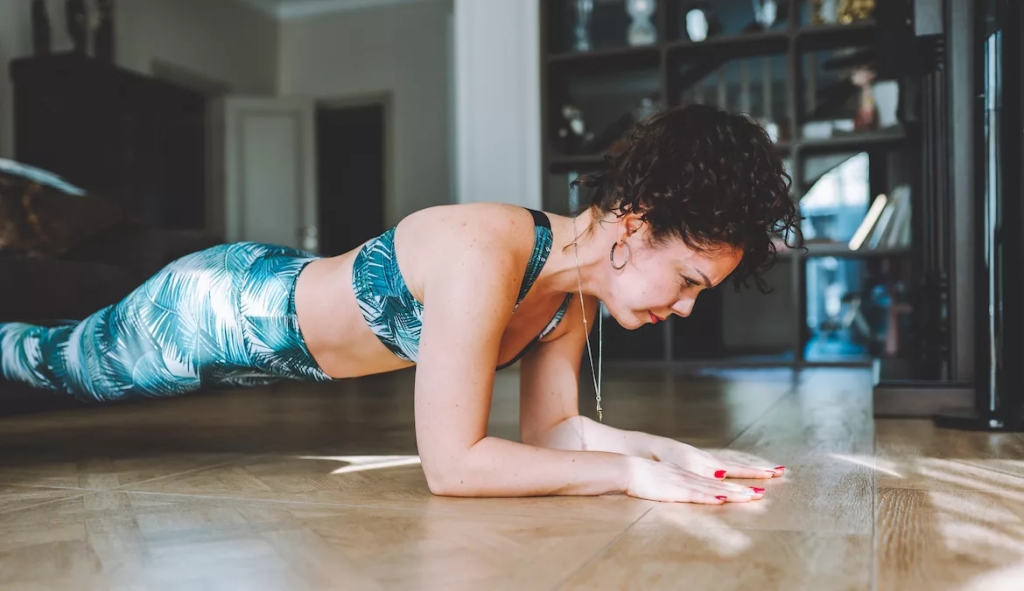
Plank
One of the most loved and hated core exercises around gets top billing in this list. “Planks work your core stability and endurance, which helps with overall balance and stability as well as protecting your spine,”
Directions: Hold your body in the top of a push-up position. Aim to hold for 60 seconds at a time.
Step-ups
Exaggerating the act of going upstairs by working one leg at a time is a great way to build strength and balance.
Directions: Using the bottom of a staircase or a sturdy four- to eight-inch tall step stool, step up onto one leg. Place your hands on a railing, counter, or other surface if you feel imbalanced. Slowly lower yourself back down, then step back up. Repeat 10 to 15 times for three sets on each leg.
Side-lying hip abduction
Dr. Behenna says she has seen dramatic improvement in clients when they learn to activate and strengthen their glutes, and these leg lifts are a great way to target the gluteus medius in particular.
Directions: Lie down on one side of your body. Bend the bottom knee and keep the top knee straight. Lift the top, straight leg in the air, keeping your heel slightly behind your hip. Lower back down. Repeat 10 to 15 times, for three sets.
Heel and toe raises
Working your calves will help keep you mobile by building strength and lengthening these often tight, knotted muscles. You’ll also activate the small muscles in your feet to help create a stable base for walking.
Directions: Stand next to a counter or railing, holding on with both hands for balance only. Rise up onto your toes, then lower back down. Repeat 30 times, for two sets. Next, keep your heels down and lift your toes up, and repeat 30 times, for two sets.
Hamstring and calf stretches
These stretches are the complement to those heel raises and step ups you just did.
Directions: To stretch your hamstring, sit sideways on the edge of a couch with the outside foot on the floor and the inside leg straight in front of you on the couch. Keeping your knee and back straight, lean forward until you feel a stretch on the back of the thigh. Hold that stretch anywhere from 15 to 30 seconds and repeat three to five times on each leg.


 CNMRI: Neurology, Sleep Medicine, MRI