“Curbing addiction isn’t the only potential extra benefit of GLP-1 drugs.
Mounjaro Zepbound Ozempic Wegovy
Other studies have suggested they can reduce the risk of death, strokes and heart attacks for people with cardiovascular disease or chronic kidney ailments, ease sleep apnea symptoms and even slow the development of Parkinson’s disease. There are now hundreds of clinical trials testing the drugs for these conditions and others as varied as fatty liver disease, Alzheimer’s disease, cognitive dysfunction and HIV complications.”
Here are five other common red flags to look out for.
Running red lights. Falling for scams. Shutting out friends.
Memory loss is the most well-known symptom of dementia, particularly Alzheimer’s disease. But experts say there are other warning signs that can signal early brain changes — ones that are especially important for types of dementia where forgetfulness is not the primary symptom.
Sleep disorders can become more common as people age, and older adults tend to sleep more lightly and go to bed and wake up a little earlier than they used to — that is completely normal. But if there are dramatic changes in someone’s sleep habits, where they are starting their morning at 3 a.m. or are unable to stay awake during the day, it can be a sign of dementia.
3. Personality Changes
In a study published last year, researchers found that people with dementia experienced slight drops in extroversion, agreeableness and conscientiousness before they showed any signs of cognitive impairment.
4. Driving Difficulties
Along with handling finances, driving is one of the most complex cognitive behaviors people perform every day. Ganesh Babulal, an associate professor of neurology at Washington University in St. Louis, has demonstrated in his research that problems behind the wheel can manifest years before they do elsewhere.
5. Loss of Smell
Parts of the brain that control smell, known as the olfactory system, are among some of the first areas damaged in Alzheimer’s disease and dementia with Lewy bodies; this is also the case for Parkinson’s disease. Many people with these conditions begin to lose their sense of smell years, or even decades, before other symptoms appear.
The latest research is revealing clues about how you might be able to lower your chances of getting dementia. Here’s what the science says about keeping your mind sharp
Offit and other experts said there are two possible reasons that the shingles vaccine might protect against dementia. First, previous research suggests that herpes infection might play a role in the development of dementia.
Shingrix dramatically decreases the reactivation of the herpes virus that causes chickenpox. It’s 97 percent effective at preventing shingles in people ages 50 to 69 with healthy immune systems, according to the CDC.
Experts also hypothesize there might be something about the particular way Shingrix stimulates the body’s immune system against shingles that decreases the chances of dementia.”
FDA OKs Another Drug for Early Alzheimer’s Disease
The FDA approved donanemab (Kisunla) for the treatment of adults with early symptomatic Alzheimer’s disease with confirmed amyloid pathology, the agency announcedopens in a new tab or window Tuesday. This includes Alzheimer’s patients with mild cognitive impairment and mild dementia.
The once-monthly treatment is the only anti-amyloid agent with evidence to support stopping therapy when amyloid plaques
In the new study, the p-tau217 test was combined with another blood biomarker for Alzheimer’s called the amyloid 42/40 ratio, which measures two types of amyloid proteins, another biomarker of Alzheimer’s disease.
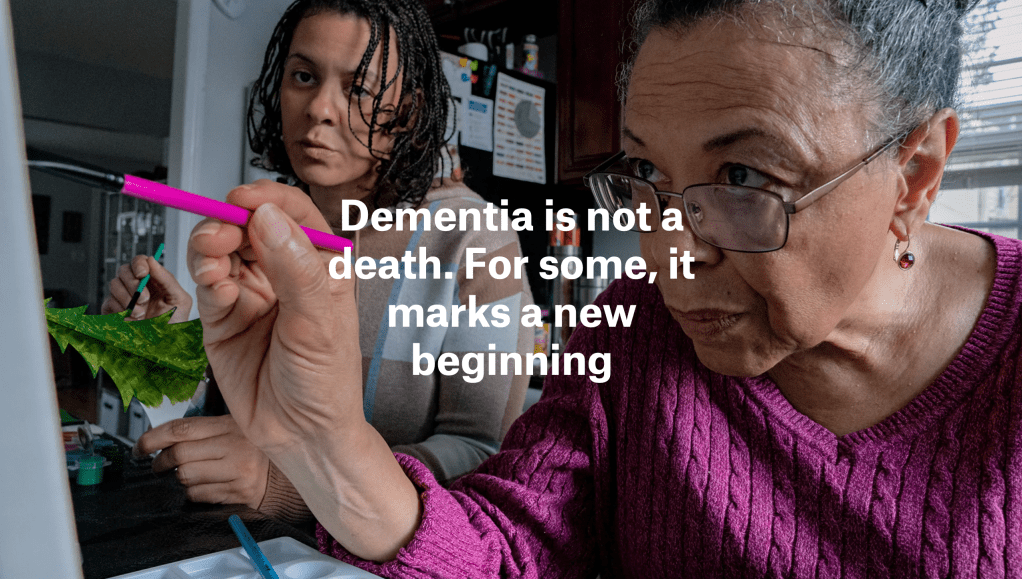
Advocates are reframing the syndrome as a different way of being – one in which potential for growth and connection endures
They argue that dementia is not a hopeless affliction, and that post-diagnostic support should become more humane and scientific. Some are even calling for the condition to be completely reimagined.
One patient, quoted in the dementia expert John Zeisel’s book ‘I’m Still Here’ goes so far as to describe it as ‘a new stage in a wonderful life, no less challenging or interesting than all the earlier stages’.
The Food and Drug Administration on Tuesday approved a new drug for Alzheimer’s disease, the latest in a novel class of treatments that has been greeted with hope, disappointment and skepticism.
The drug, donanemab, to be sold under the brand name Kisunla, was shown in studies to modestly slow the pace of cognitive decline in early stages of the disease. It also had significant safety risks, including swelling and bleeding in the brain.
Kisunla, made by Eli Lilly, is similar to another drug, Leqembi, approved last year. Both are intravenous infusions that attack a protein involved in Alzheimer’s, and both can slow the unfolding of dementia by several months. Both also carry similar safety risks. Leqembi, made by Eisai and Biogen, is given every two weeks; Kisunla is given monthly.
Kisunla has a significant difference that may appeal to patients, doctors and insurers: Lilly says patients can stop the drug after it clears the protein, amyloid, which clumps into plaques in the brains of people with Alzheimer’s.
“Once you’ve removed the target that you’re going after, you then can stop dosing,” said Anne White, an executive vice president of Lilly and president of its neuroscience division. She said that this could reduce the overall cost and inconvenience of the treatment as well as the risk of side effects.
“As Science noted in its story on the retracted paper, scientists are still debating whether the amyloid theory is viable. The skeptics cite the fraudulent research and lack of a genuine breakthrough; supporters can point to this new class of drugs including donanemab that have led to some improvement in some patients.”


 CNMRI: Neurology, Sleep Medicine, MRI