Offit and other experts said there are two possible reasons that the shingles vaccine might protect against dementia. First, previous research suggests that herpes infection might play a role in the development of dementia.
Shingrix dramatically decreases the reactivation of the herpes virus that causes chickenpox. It’s 97 percent effective at preventing shingles in people ages 50 to 69 with healthy immune systems, according to the CDC.
Experts also hypothesize there might be something about the particular way Shingrix stimulates the body’s immune system against shingles that decreases the chances of dementia.”
FDA OKs Another Drug for Early Alzheimer’s Disease
The FDA approved donanemab (Kisunla) for the treatment of adults with early symptomatic Alzheimer’s disease with confirmed amyloid pathology, the agency announcedopens in a new tab or window Tuesday. This includes Alzheimer’s patients with mild cognitive impairment and mild dementia.
The once-monthly treatment is the only anti-amyloid agent with evidence to support stopping therapy when amyloid plaques
In the new study, the p-tau217 test was combined with another blood biomarker for Alzheimer’s called the amyloid 42/40 ratio, which measures two types of amyloid proteins, another biomarker of Alzheimer’s disease.
Gov. John Carney signed several marijuana bills into law last week, paving the way for existing medical marijuana businesses in Delaware to start recreational sales on an expedited basis.
This week, Delaware Public Media’s Sarah Petrowich talks with Adam Goers – Senior Vice President of Corporate Affairs for The Cannabist Company, which currently operates three medical dispensaries in the First State – about the prospect of medical marijuana providers soon being able to sell recreationally to customers.
DPM’s Sarah Petrowich talks with The Cannabist Company’s Adam Goers about the prospect of a recreational marijuana market in Delaware
In early 2023, Viking started a Phase 1 clinical study on the oral formulation of VK2735. The 28-day study showed that taking oral VK2735 led to noticeable weight loss. Participants who took VK2735 lost up to 5.3% of their body weight. Compared to those who took a placebo (a pill with no medicine), VK2735 users lost up to 3.3% more weight. Even after stopping the medicine, the weight loss effect continued for six more days, with participants losing up to 3.6% more than those on placebo. About 57% of people taking VK2735 lost at least 5% of their body weight in 28 days, while no one in the placebo group did. Viking believes that taking VK2735 for more than 28 days could lead to even more weight loss.
VK2735 also showed good safety and tolerability over the 28 days of daily dosing. Most side effects were mild, with 76% being mild and 24% moderate. For stomach-related side effects, 79% were mild. Some people (14%) had mild nausea, but no one vomited. One person had diarrhea, compared to two people in the placebo group. Overall, there were no significant differences in stomach problems between those taking VK2735 and the placebo. No serious side effects have been reported.
Here is a look at where Ms. Harris stands on healthcare policy issues
1. Reproductive health rights are likely to be a cornerstone of Ms. Harris’ campaign, according to KFF Health News.
2. Mergers and Acquisitions: Ms. Harris strongly opposed healthcare consolidation and prosecuted numerous industry players for alleged fraud or antitrust violations, according to The New York Times.
3. Ms. Harris proposed her own “Medicare for All” plan. In a departure from Mr. Sanders, the proposal called for a 10-year phase-in period and would allow private insurers to compete with a government-led system.
4. Ms. Harris has advocated for student loan debt forgiveness during her time as California attorney general and as vice president, particularly for those working in public service sectors such as education, law enforcement and healthcare.
5. Ms. Harris has advocated for investments to address the nation’s maternal health crisis and reduce health inequities. In 2022, she unveiled the administration’s Blueprint for Addressing the Maternal Health Crisis.
6. In April, Ms. Harris announced two final rules that set minimum staffing requirements for long-term care facilities and at-home services, and require facilities to have a registered nurse on site 24/7.
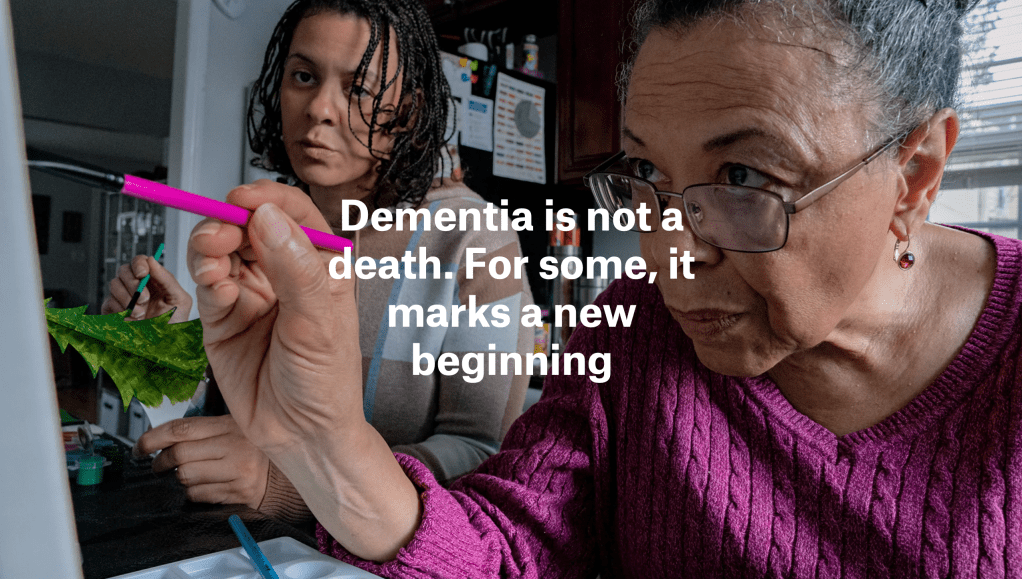
Advocates are reframing the syndrome as a different way of being – one in which potential for growth and connection endures
They argue that dementia is not a hopeless affliction, and that post-diagnostic support should become more humane and scientific. Some are even calling for the condition to be completely reimagined.
One patient, quoted in the dementia expert John Zeisel’s book ‘I’m Still Here’ goes so far as to describe it as ‘a new stage in a wonderful life, no less challenging or interesting than all the earlier stages’.
Semaglutide vs Tirzepatide for Weight Loss in Adults With Overweight or Obesity
After a full year of evaluation, patients taking Mounjaro lost 15.3% of their starting weight, compared to almost half of that — 8.3% — while taking Ozempic for 12 months.
“Individuals with overweight or obesity treated with tirzepatide (Mounjaro, Zepbound) were significantly more likely to achieve clinically meaningful weight loss and larger reductions in body weight compared with those treated with semaglutide (Ozempic, Wegovy),” the authors wrote.
In this large clinical analysis of US adults with overweight or obesity who initiated tirzepatide or semaglutide treatment, those receiving tirzepatide were more likely to achieve 5% or greater, 10% or greater, and 15% or greater weight loss and experienced larger reductions in body weight at 3, 6, and 12 months. To our knowledge, this study represents the first clinical comparative effectiveness study of tirzepatide and semaglutide in adults with overweight or obesity.
For the 11 years I was practicing general dentistry, about five patients came into my practice each year with severe temporomandibular joint (TMJ) disorders that were impacting their daily lives. This type of jaw pain was debilitating, but I hadn’t learned anything about treating it in dental school. I felt like the medical and dental communities had failed these patients.
Priya Mistry is a jaw expert and treats patients with TMJ.
I wanted to do better for them, so I asked to shadow a TMJ expert. I watched as he evaluated patients’ posture and leg length. He taught me how the jaw — along with the feet, hips, and spine — is essential for posture. His patients told me he had saved their lives because they had so much jaw pain before seeing him.
Related stories
By the end of the first day, I knew I wanted to take over his practice. I had a 2-year-old and a 2-month-old at the time, so he was skeptical. But I worked under him for three years and brought the practice when he retired in 2021. Now, he’s like a second dad to me.
Since then, I’ve learned a lot about jaw health — including that seemingly harmless things can really impact your jaw. Here are five common things you should avoid if you want to foster good jaw health in yourself and your kids.
Avoid resting your head on your hands
Many people rest their heads against their fists when they’re looking at the computer during the day. This puts a lot of lateral pressure on the temporomandibular joint, which is designed mostly for back-and-forth movement. Even 20 minutes here and there adds up and can strain your jaw muscles or joints.
I caution my patients against chewing pens, gum, or fingernails
Humans aren’t meant to be chewing constantly. Chewing on items throughout the day — like pens, fingernails, or gum — means you’re overusing your jaw muscles. You wouldn’t do bicep curls all day, right? Chewing on gum or other items is like doing that for your jaw and can lead to overuse injuries.
Don’t even get me started on popular jaw strengtheners, which people chew on to try to get a more defined jawline. Those things scare me and I would recommend everyone steer clear.
Don’t use your teeth to open things
Lots of people grind their teeth at night without realizing it, which can weaken the teeth. When you use your teeth to tear open a plastic package or anything else, it puts a lot of pressure on the teeth. Sometimes, it’s the straw that breaks the camel’s back, and your tooth can crack or chip.
It’s easier said than done, but try to reduce stress
Lots of TMJ problems happen because people clench or grind their jaws. When we’re emotionally stressed, we clench even more than normal. During the pandemic, referrals to my practice skyrocketed, and my mentor and I fully believed it was because of stress. If possible, try to find ways to reduce and manage your stress and relax your jaw.
I advise parents to wean babies off pacifiers by 6 months
Pacifiers and thumb sticking can cause the mouth, palette, and jaw to grow in all sorts of wrong directions. That’s why I like to see babies stop using pacifiers by 6 months. Pacifiers interrupt healthy tongue posture (in which the tongue is touching the roof of the mouth). That can lead to mouth breathing and other health concerns that could be avoided by kicking the pacifier early.
Jaw health and tongue position can play a huge role in overall health. Taking small actions to take care of your oral health now — and getting help if you experience issues like clicking, popping, or mouth breathing — can help you stay healthy.




 CNMRI is Closed for Business