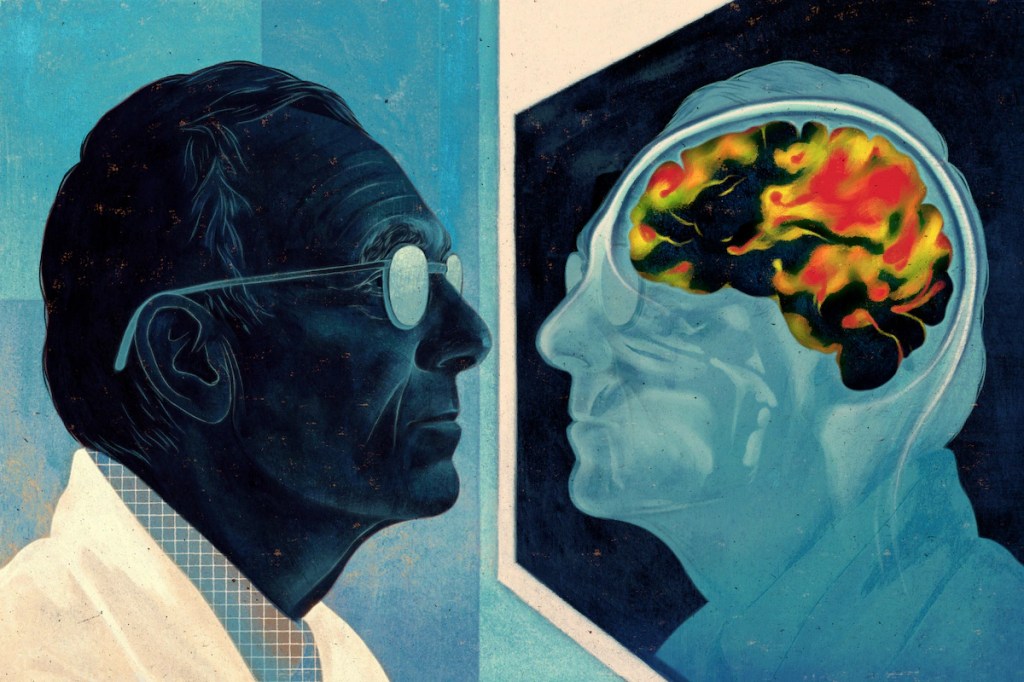
“IF YOU TAKE a GLP-1 agonist like Ozempic or Zepbound, you can see changes to your waistline and your blood sugar within weeks. What might be less obvious is how the drug is affecting your brain. Research suggests these popular weight-loss medications can influence everything from daily behavior to risk of age-related memory loss, and neuroscientists are working overtime to discover exactly how these drugs affect the brain.
“It is a hot topic,” says Kevin Williams, Ph.D., a neuroscientist at the University of Texas Medical Branch. “If you can understand how these drugs are accessing the brain and where they are acting, then potentially that could guide future drug development to be able to better target these regions.”
Recently, the protective effects of sulforaphane on brain health were also considerably studied, where the studies have further extended to several neurological diseases, including Alzheimer’s disease (AD), Parkinson’s disease, Huntington’s disease, amyotrophic lateral sclerosis, multiple sclerosis, autism spectrum disorder, and schizophrenia.
Animal and cell studies that employ sulforaphane against memory impairment and AD-related pre-clinical biomarkers on amyloid-β, tau, inflammation, oxidative stress, and neurodegeneration are summarized, and plausible neuroprotective mechanisms of sulforaphane to help prevent AD are discussed.
The increase in pre-clinical evidences consistently suggests that sulforaphane has a multi-faceted neuroprotective effect on AD pathophysiology. The anti-AD-like evidence of sulforaphane seen in cells and animals indicates the need to pursue sulforaphane research for relevant biomarkers in AD pre-symptomatic populations.
I suddenly wore two hats — that of a retired physician who had cared for people with Alzheimer’s disease and now a person living with the same disorder.
I have a special interest in Alzheimer’s disease. For nearly 25 years, I practiced general neurology in Portland, Oregon, and some of my patients had dementia. In 2012, while doing a genealogical DNA search, I inadvertently discovered that I have two copies of the APOE-4 allele, meaning I had a very good chance of getting Alzheimer’s-caused dementia by age 80. I felt gobsmacked. I remember walking down the stairs in a daze after reading the report from the genetic testing service and telling my wife, Lois, “I think I am screwed.”
A year later, I retired at age 62 even though I had no symptoms of cognitive impairment. If I had almost any other job, I could have continued working for a few more years, but in medicine, forgetfulness could have fatal consequences. I suddenly wore two hats — that of a retired physician who had cared for a lot of people with Alzheimer’s disease and now a person living with the same disorder.
I had been taught, in medical school in the 1970s and even during my neurology residency in the 1980s, that Alzheimer’s disease progresses from onset to death in about three to five years, and nothing can be done about it. Neither statement is true.
In hindsight, my first symptom of Alzheimer’s disease was a gradual loss of smell that I first noticed in 2006. This was accompanied by odd olfactory hallucinations that smelled like baking bread mixed with perfume. I didn’t have any measurable cognitive impairment until 2015, when I had significant trouble remembering words, including the names of friends and colleagues.
I had a PET scan as part of a research study, which showed my brain had the beginning of abnormal tau protein, a key part of diagnosing Alzheimer’s. When the scans were repeated in 2018 and 2022, the tau protein can be seen spreading through my brain.
We now know that the first signs of Alzheimer’s disease, beta-amyloid plaques, can be seen in the brain up to 20 years before any cognitive changes. Tau-containing tangles start to form later, about two or three years before the onset of mild cognitive impairment. There is a variation in the speed of progression from mild impairment to full-blown dementia to death, probably about eight to 12 years on average.
I am now 73, and I have had mild cognitive impairment for roughly five years, followed by mild dementia for about four years. We don’t yet have a way to stop this progression, but what have I been doing to slow it?
There are lifestyle modifications that help, and they also decrease the likelihood of getting it in the first place.
Top among them is aerobic exercise. Multiple studies have shown up to a 50 percent reduction in the chance of getting Alzheimer’s disease for people who exercise regularly. The only group that doesn’t seem to benefit from exercise are those who already have dementia. The sooner you start, the better.
I started exercising daily in 2012 as soon as I learned that I was on the Alzheimer’s trajectory. Recent evidence shows that tai chi can help people who already are experiencing cognitive impairment.
The data for adopting a plant-based diet are almost as strong as exercise. I follow a variant of the Mediterranean diet called the MIND diet that includes eating foods with increased flavonols such as nuts and certain vegetables. Many experts now recommend avoiding alcohol, especially for people with a family history of dementia. Recently, I gave up my daily glass of beer or wine. Frankly, I have been surprised that nonalcoholic beer tastes quite good.
Staying mentally active is very important. For me, my most important brain exercise is reading and writing. I do a crossword puzzle every day while eating lunch, and I enhance the brain benefit by looking up words I don’t know. Staying socially engaged is important but increasingly difficult as dementia progresses. It’s best for me to socialize with just one or two people at a time. Getting at least 7½ hours of sleep each night appears to reduce the chance of getting dementia.
What about drugs? We now have two FDA-approved drugs, lecanemab and donanemab, that are effective in removing beta-amyloid from the brain, but they only slow cognitive decline by about 35 percent. They can also have lethal side effects in patients with two copies of the APOE-4 allele, like me. After only four monthly injections of aducanumab (a cousin of lecanemab) during the phase 3 trial, I developed swelling and bleeding in my brain requiring a stay in an intensive care unit and about four months to recover. The drug has since been discontinued by its manufacturer.
These treatments represent an important step forward in understanding the neurobiology of Alzheimer’s disease, but they should not be used by everyone.
So I have learned that Alzheimer’s disease is not the rapidly progressive dementia I was taught about in medical school. It is a slowly progressive disease that is asymptomatic for up to 20 years. Mild symptoms of cognitive impairment may be annoying but usually can allow normal activities for another five years or so. Even work may be possible with accommodations. Once someone has dementia, unable to live independently, lifestyle modifications and medications do not seem to be as effective. In my experience, it is critical to manage Alzheimer’s disease in the early stages to postpone the onset of dementia. Don’t wait for the horses to get out of the barn.
A claim file is a collection of the information your insurer used to decide whether it would pay for your medical treatment or services. Most people in the U.S. facing a denial have the right to request their claim file from their insurer. It can include internal correspondence, recordings of phone calls, case notes, medical records and other relevant information.
Information in your claim file can be critical when appealing denials. Some patients told us they received case notes showing that their insurer’s decision was the outcome of cost-cutting programs. Others have gotten denials overturned by obtaining recordings of phone calls where company staff introduced errors into their cases.
In the first head-to-head test, Eli Lilly’s Zepbound obesity drug helped people lose significantly more weight than its main competitor, Novo Nordisk’s Wegovy.
People taking Zepbound lost 20.2% of their body weight on average after 72 weeks of treatment in the Lilly-sponsored study, compared with a 13.7% loss for Wegovy patients, Lilly said Wednesday.
That translated into an average 50-pound loss for people who took Zepbound, while Wegovy users lost 33 pounds.
PS: Zepbound and Mounjaro are the same drug with different brand names, as are Ozempic and Wegovy.
There is a wide variation in health care costs, whether it’s imaging, prescription costs or even routine care.
For example, an MRI scan of the lumbar spine (low back area) costs around $277 at our facility versus $767 at Bayhealth (that’s almost 3 times more!)
Take a look at Delaware’s ‘CostAware’ for more pricing information. You’ll be surprised at the differences (not unusual for hospital facilities to be 3 to 6 times more than outpatient centers!)
Over the past few years, I’ve had the privilege of getting to know Sarah McBride through my role as President of the Medical Society of Delaware. She is truly extraordinary – a remarkable blend of intelligence, compassion, and genuine commitment to public service. Her decision to run for Congress was inspiring, and I am proud to stand among the many Delawareans who enthusiastically supported her candidacy.
The recent attacks by Congresswoman Nancy Mace are not just disappointing, but deeply troubling. Instead of engaging in substantive policy discussions that matter, her tactics represent a cynical approach that undermines the democratic process. Real leadership is about solving problems, building understanding, and bringing people together – not spreading misinformation or engaging in personal attacks.
I remain hopeful that Americans will see through these divisive tactics and recognize the true leadership qualities that Sarah McBride embodies. Our democracy is strongest when we elevate substantive dialogue and elect representatives who genuinely care about making a meaningful difference in people’s lives.
This opinion piece by Dr Scott Gottlieb, a Pfizer board member, may be biased towards the pharmaceutical industry 🤔
“FDA’s permissive stance on the compounding of GLP-1 drugs used for weight loss. Initially, the agency cited shortages of semaglutide and tirzepatide — the active ingredients in the popular drugs Wegovy and Zepbound — and allowed pharmacies to compound these drugs under a provision for addressing drug shortages.”
Preprint on Alzheimer’s drug deaths ignites dispute among authors
“Infighting among a group of prominent Alzheimer’s disease researchers has led to the withdrawal of a preprint they co-authored, which suggested a new Alzheimer’s drug markedly increases the risk of death. One scientist involved in the work charges the senior author failed to seek the go-ahead from his co-authors before posting an edited version of the article to a preprint server.”
TL:DR 50% reduction in AHI (apnea-hypoxia index) and a lowering of blood pressure (which may reduce risk of stroke and heart attack!)
Obstructive sleep apnea is one of the most common respiratory disorders worldwide. Persons with obstructive sleep apnea can have loud snoring that is detrimental to social relationships and have breathing problems that result in recurrent nocturnal awakenings, unrefreshing sleep, and excessive daytime sleepiness — effects that together can substantially impair quality of life.
The improvement in systolic blood pressure that was seen with tirzepatide was substantially larger than effects seen with CPAP therapy alone7 and indicate that tirzepatide may be an attractive option for those patients who seek to reduce their cardiovascular risk
The initial results from the SURMOUNT-OSA trial show the usefulness of tirzepatide as an adjunctive treatment to address coexisting obesity in patients with obstructive sleep apnea. Weight loss resulting from tirzepatide treatment may be leveraged to expand the populations that may benefit from second-line treatments for obstructive sleep apnea.





 CNMRI is Closed for Business