APOE Association with Alzheimer’s Explained

Alzheimer’s disease, the most prevalent form of dementia, typically occurs after the age of 65. A significant genetic factor associated with this type of Alzheimer’s at a younger age is a gene called apolipoprotein E (APOE), which comes in three common variations:

APOE e2: This form is the least common and is associated with a reduced risk of Alzheimer’s disease.

APOE e4: More prevalent than e2, this gene variant increases the risk of Alzheimer’s and is linked to a more severe form of the disease.

APOE e3: The most common variant, it does not seem to significantly affect the risk of developing Alzheimer’s.

It’s important to note that genes are not the sole determining factor in Alzheimer’s disease risk.

Each individual inherits one copy of the APOE gene from each parent. Having at least one APOE e4 gene doubles or triples the risk of developing Alzheimer’s disease. Some individuals inherit two APOE e4 genes, one from each parent, which substantially increases the risk, by about eight- to twelvefold.

You Are What You Eat

One of my frequent admonishments to patients is to only eat what God makes (or just avoid anything with a bar code — until a patient reminded me that fruit and vegetables are bar coded 😂)

“A review of research involving almost 10 million people has found a direct association between eating too many ultra-processed foods — those breads, cereals, snacks and frozen meals that have been industrially manufactured with flavors and additives to make them more palatable — and more than 30 health conditions, including heart disease, anxiety and early death.”

https://www.washingtonpost.com/wellness/2024/02/29/ultraprocessed-foods-health-risk/

More on Sleep – The ‘Sleepy Girl’ Mocktail

Leave it to TikTok to come up with strategies on how to sleep better. I’m told the “sleepy girl mocktail” is the latest recommendation. It’s a concoction of  tart cherry juice, magnesium powder and soda water, poured over ice. Cherries are a natural source of melatonin and also contains tryptophan, which combined with magnesium is purported to calm down your nervous system for better rest.

Here’s one recipe for the Sleepy Girl Mocktail (there are many variations.) You’ll need a few ingredients and a large glass. Give it a try and let us know if it works for you in the Comment section.

Fill a glass of your choosing with ice. Next, pour in the ½ cup of cherry juice. Add 1 tablespoon of magnesium powder to the liquid and stir well. Then top it off with your favorite lemon-lime flavored beverage. Some people also add two teaspoons of elderberry syrup.

When a Preschool Was Opened Inside a Dementia Care Home, All Heaven Broke Loose

“They say it takes a village to raise a child. Centered on that concept of communal flourishing, Northwest England’s first intergenerational care village, home to both older people and young children living and learning together, recently celebrated its official opening.

Stimulation, learning, fun—these are activities that are known to delay the progression of dementia, and what better way to add these critical elements of life to a daily regimen than to let a flock of preschoolers do it?”

Multi-Vitamin/Mineral Supplements Helpful in Preventing Cognitive Decline

‘A vitamin pill a day keeps the doctor away’

Supplements vs placebo are beneficial in preventing cognitive decline among older adults, according to study findings.” Researchers came to this conclusion after analyzing data from the COSMOS trials, which “included participants aged 60 and older who were randomly assigned to receive a cocoa extract (500 mg flavanols/day) and/or a daily multivitamin-mineral (Centrum Silver) supplement for the prevention of cardiovascular disease and cancer.” 

Multivitamin-Mineral Supplementation Prevents Cognitive Decline in Older Adults

Inexpensive Generic Sources for Centrum Silver

Centrum Silver Generic for Women

Centrum Silver Generic for Men

Early dementia diagnosis: blood proteins reveal at-risk people

The results of a large-scale screening study could be used to develop blood tests to diagnose diseases such as Alzheimer’s before symptoms take hold.

“An analysis of around 1,500 blood proteins has identified biomarkers that can be used to predict the risk of developing dementia up to 15 years before diagnosis.

The findings, reported today in Nature Aging1, are a step towards a tool that scientists have been in search of for decades: blood tests that can detect Alzheimer’s disease and other forms of dementia at a very early, pre-symptomatic stage.

Researchers screened blood samples from more than 50,000 healthy adults in the UK Biobank, 1,417 of whom developed dementia in a 14-year period.

They found that high blood levels of four proteins — GFAP, NEFL, GDF15 and LTBP2 — were strongly associated with dementia.”

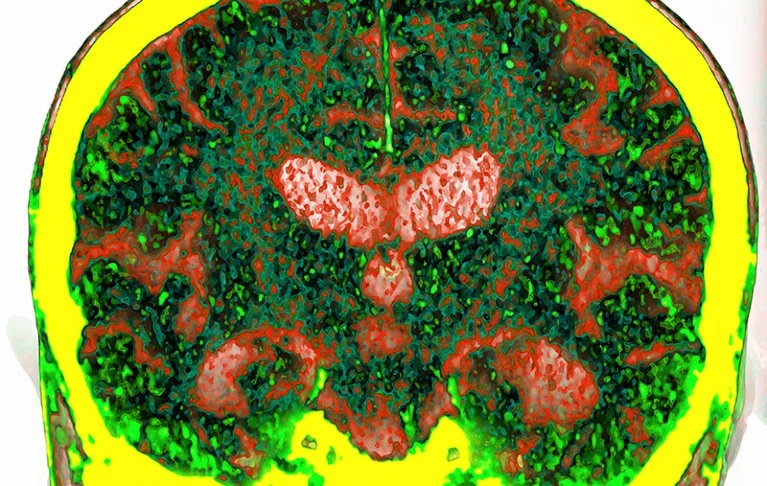
A computed-tomography scan of a brain affected by Alzheimer’s disease, the most common cause of dementia.
Credit: Vsevolod Zviryk/Science Photo Library

https://www.nature.com/articles/d41586-024-00418-9

How to fight dementia, according to neurologists

“Get ready to focus on your brain, because according to the AAN, the era of preventive neurology has arrived. In fact, the academy is hoping that all Americans will be on the healthy brain train by 2050.

“It’s a brain health revolution,” Rost said. “We want to help the public understand that a lifetime of health begins with brain health.”

https://www.cnn.com/2024/02/12/health/brain-checkup-wellness/index.html

FDA grants breakthrough designation to frontotemporal dementia treatment

Key takeaways: 

  • Latozinemab is an investigational human monoclonal antibody.
  • The drug is currently being examined in a phase 3 clinical trial.

The FDA has granted breakthrough therapy designation to latozinemab, an investigational therapeutic designed to block sortilin and elevate progranulin to treat frontotemporal dementia with a progranulin gene mutation.

According to a press release from Alector Inc., the breakthrough designation was approved based on data from the phase 2 INFRONT-2 clinical trial of latozinemab in patients with the condition.

https://www.healio.com/news/neurology/20240208/fda-grants-breakthrough-designation-to-frontotemporal-dementia-treatment

New wearable treatment for Parkinson’s

The science behind the CUE1

Focused stimulation for Parkinson’s
This phenomenon was first described in the 19th century when Professor Jean-Martin Charcot noticed an improvement in his Parkinson’s patients after a bumpy carriage ride.”

https://charconeurotech.com/the-science/