“The Lichtman laboratory at Harvard University and the Connectomics at Google team are releasing the “H01” dataset and companion paper. H01 is a 1.4 petabyte volume of a small sample of human brain tissue.
The sample was imaged at nanoscale-resolution by serial section electron microscopy, reconstructed and annotated by automated computational techniques, and analyzed for preliminary insights into the structure of human cortex.”
Scientists identify the brain cells that regulate inflammation, and pinpoint how they keep tabs on the immune response.
Scientists have long known that the brain plays a part in the immune system — but how it does so has been a mystery. Now, scientists have identified cells in the brainstem that sense immune cues from the periphery of the body and act as master regulators of the body’s inflammatory response
The results in Nature suggest that the #Brain maintains a delicate balance between the molecular signals that promote inflammation and those that dampen it — a finding that could lead to treatments for autoimmune diseases and other conditions caused by an excessive immune response
Crazy that FDA fast-tracked the first novel drug for Alzheimer’s but now the agency has decided to convene a panel of independent experts to evaluate the drug’s safety and efficacy of Eli Lilly’s donanemab.
The decision is likely to surprise many Alzheimer’s experts, doctors and patients who had expected the medication would soon be on the market. The F.D.A.’s move was startling to the company, which had been planning for the agency to greenlight the drug during the first quarter of this year.
“We were not expecting this,” Anne White, an executive vice president of Lilly and president of its neuroscience division, said in an interview. She said that while the F.D.A. often calls on such independent advisory committees when it has questions about drugs, it was unusual to do so “at the end of the review cycle and beyond the action date that the F.D.A. had given us.”
The results of a large-scale screening study could be used to develop blood tests to diagnose diseases such as Alzheimer’s before symptoms take hold.
“An analysis of around 1,500 blood proteins has identified biomarkers that can be used to predict the risk of developing dementia up to 15 years before diagnosis.
The findings, reported today in Nature Aging1, are a step towards a tool that scientists have been in search of for decades: blood tests that can detect Alzheimer’s disease and other forms of dementia at a very early, pre-symptomatic stage.
Researchers screened blood samples from more than 50,000 healthy adults in the UK Biobank, 1,417 of whom developed dementia in a 14-year period.
They found that high blood levels of four proteins — GFAP, NEFL, GDF15 and LTBP2 — were strongly associated with dementia.”
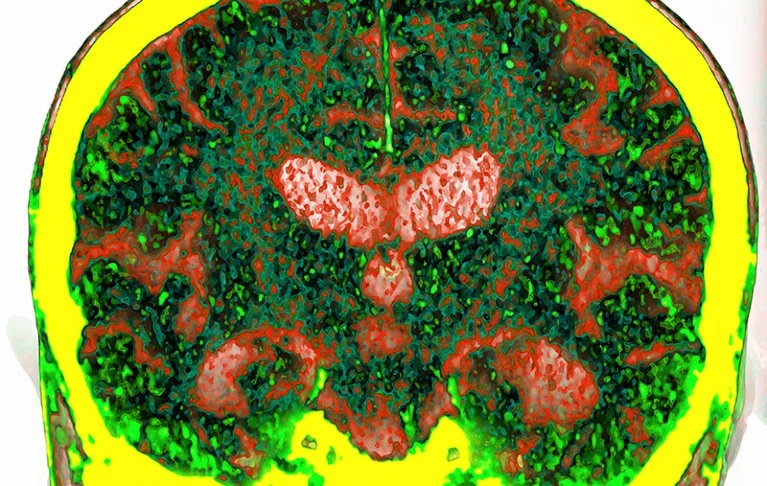
A computed-tomography scan of a brain affected by Alzheimer’s disease, the most common cause of dementia. Credit: Vsevolod Zviryk/Science Photo Library
Latozinemab is an investigational human monoclonal antibody.
The drug is currently being examined in a phase 3 clinical trial.
The FDA has granted breakthrough therapy designation to latozinemab, an investigational therapeutic designed to block sortilin and elevate progranulin to treat frontotemporal dementia with a progranulin gene mutation.
According to a press release from Alector Inc., the breakthrough designation was approved based on data from the phase 2 INFRONT-2 clinical trial of latozinemab in patients with the condition.
Delaware is 43rd among states in the US with 38% of the population considered obese! For comparison, West Virginia is 50th with 41% obese, and Colorado ranked 1st with 25% obese.
GLP-1 medications semaglutide (Ozempic, Wegovy) and tirzepatide (Mounjaro, Zepbound) are expensive treatment options for obesity, usually $1,000 or more per month (although insurers and PBM’s pay less – I’ve heard around $500 +/-) The State of Delaware is currently blaming the expense of these medications on the increase in cost of the State Employee benefit programs.
Not factored in are the savings from complications of diabetes and hypertension and the reduction in cardiovascular and orthopedic disorders (savings which may take years to show up.)
Presently, Delaware has been spending about $2.5 million a month on these drugs – total health plan spending over the first six months is about $15 million, which would equate to $30 million per year!
Delaware chose to cover the drugs last March and is now reassessing whether to make changes to its coverage policies. The State Employee Benefits Committee, which oversees Delaware’s health care plans for state workers and retirees, will be discussing this issue at upcoming meetings on Feb. 20, March 11 and 25 before making a recommendation to the State. Email the benefits committee at sebc@delaware.gov if you would like to comment.
According to a recent NPR story on Delaware Public Media, drugs like Ozempic can help weight loss, but not without ethical and health concerns.
“North Carolina shouldered the cost of the weight loss drug Wegovy for 2,800 state workers in 2021. Last year, that number shot up to 25,000 totaling $100 million.
Last Thursday, the state decided not to pay for it any longer. Celebrities and people like Elon Musk who can afford $1,000 a month for Ozempic and Wegovy can still get them. However, a nurse in North Carolina told The New York Times that finding Wegovy is like winning the lottery.
These Food and Drug Administration-approved, plant-based injectable drugs were initially developed to treat diabetes, but they also help with obesity. But demand for Ozempic and Wegovy’s weight-loss properties rose so high that diabetics had trouble finding them. There aren’t enough chemicals to keep up with the demand, creating a scarcity.”
“The first human patient has received an implant from brain-chip startup Neuralink on Sunday and is recovering well, the company’s billionaire founder Elon Musk said.
“Initial results show promising neuron spike detection,” Musk said in a post on the social media platform X on Monday.
Spikes are activity by neurons, which the National Institute of Health describes as cells that use electrical and chemical signals to send information around the brain and to the body.”




 CNMRI: Neurology, Sleep Medicine, MRI