“IF YOU TAKE a GLP-1 agonist like Ozempic or Zepbound, you can see changes to your waistline and your blood sugar within weeks. What might be less obvious is how the drug is affecting your brain. Research suggests these popular weight-loss medications can influence everything from daily behavior to risk of age-related memory loss, and neuroscientists are working overtime to discover exactly how these drugs affect the brain.
“It is a hot topic,” says Kevin Williams, Ph.D., a neuroscientist at the University of Texas Medical Branch. “If you can understand how these drugs are accessing the brain and where they are acting, then potentially that could guide future drug development to be able to better target these regions.”
Recently, the protective effects of sulforaphane on brain health were also considerably studied, where the studies have further extended to several neurological diseases, including Alzheimer’s disease (AD), Parkinson’s disease, Huntington’s disease, amyotrophic lateral sclerosis, multiple sclerosis, autism spectrum disorder, and schizophrenia.
Animal and cell studies that employ sulforaphane against memory impairment and AD-related pre-clinical biomarkers on amyloid-β, tau, inflammation, oxidative stress, and neurodegeneration are summarized, and plausible neuroprotective mechanisms of sulforaphane to help prevent AD are discussed.
The increase in pre-clinical evidences consistently suggests that sulforaphane has a multi-faceted neuroprotective effect on AD pathophysiology. The anti-AD-like evidence of sulforaphane seen in cells and animals indicates the need to pursue sulforaphane research for relevant biomarkers in AD pre-symptomatic populations.
This opinion piece by Dr Scott Gottlieb, a Pfizer board member, may be biased towards the pharmaceutical industry 🤔
“FDA’s permissive stance on the compounding of GLP-1 drugs used for weight loss. Initially, the agency cited shortages of semaglutide and tirzepatide — the active ingredients in the popular drugs Wegovy and Zepbound — and allowed pharmacies to compound these drugs under a provision for addressing drug shortages.”
“Curbing addiction isn’t the only potential extra benefit of GLP-1 drugs.
Mounjaro Zepbound Ozempic Wegovy
Other studies have suggested they can reduce the risk of death, strokes and heart attacks for people with cardiovascular disease or chronic kidney ailments, ease sleep apnea symptoms and even slow the development of Parkinson’s disease. There are now hundreds of clinical trials testing the drugs for these conditions and others as varied as fatty liver disease, Alzheimer’s disease, cognitive dysfunction and HIV complications.”
Offit and other experts said there are two possible reasons that the shingles vaccine might protect against dementia. First, previous research suggests that herpes infection might play a role in the development of dementia.
Shingrix dramatically decreases the reactivation of the herpes virus that causes chickenpox. It’s 97 percent effective at preventing shingles in people ages 50 to 69 with healthy immune systems, according to the CDC.
Experts also hypothesize there might be something about the particular way Shingrix stimulates the body’s immune system against shingles that decreases the chances of dementia.”
In early 2023, Viking started a Phase 1 clinical study on the oral formulation of VK2735. The 28-day study showed that taking oral VK2735 led to noticeable weight loss. Participants who took VK2735 lost up to 5.3% of their body weight. Compared to those who took a placebo (a pill with no medicine), VK2735 users lost up to 3.3% more weight. Even after stopping the medicine, the weight loss effect continued for six more days, with participants losing up to 3.6% more than those on placebo. About 57% of people taking VK2735 lost at least 5% of their body weight in 28 days, while no one in the placebo group did. Viking believes that taking VK2735 for more than 28 days could lead to even more weight loss.
VK2735 also showed good safety and tolerability over the 28 days of daily dosing. Most side effects were mild, with 76% being mild and 24% moderate. For stomach-related side effects, 79% were mild. Some people (14%) had mild nausea, but no one vomited. One person had diarrhea, compared to two people in the placebo group. Overall, there were no significant differences in stomach problems between those taking VK2735 and the placebo. No serious side effects have been reported.
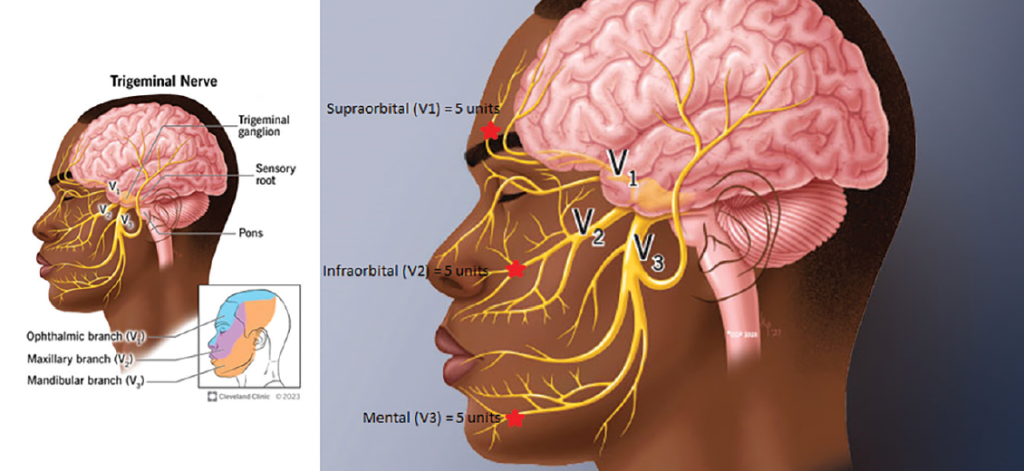
There is a growing body of evidence suggesting that Botox is a safe and effective treatment for trigeminal neuralgia.
Trigeminal neuralgia (TN) is a chronic facial pain disorder characterized by sudden, severe, electric shock-like pain in one or more branches of the trigeminal nerve. This condition is relatively rare, with about 4.3 new cases per 100,000 people each year in the US.
TN can significantly impact quality of life, often leading to higher rates of depression, anxiety, and sleep disorders compared to the general population. Common triggers like brushing teeth, chewing, and swallowing can be so painful that individuals may neglect oral hygiene, lose weight, become dehydrated, and develop anxiety about these activities. TN can be highly disabling, with up to 45% of sufferers missing daily activities for at least 15 days in six months, and over 50% experiencing severe anxiety and depression related to their pain.
Trigeminal Neuralgia Treatment
The first line of treatment for TN usually includes anticonvulsant medications such as carbamazepine, oxcarbazepine, lamotrigine, gabapentin, lacosamide, or the muscle relaxant baclofen. However, these drugs often have side effects like fatigue, cognitive issues, dizziness, tremors, and electrolyte imbalances, which can limit their use. For acute pain flares, treatments like infusion therapy and trigeminal nerve blocks are used.
Surgical options for classic TN include microvascular decompression, gamma knife radiosurgery, and balloon compression, but these come with concerns about tolerability, long-term efficacy, and safety.
Botox for Trigeminal Neuralgia Treatment
Botox, also known as OnabotulinumtoxinA, FDA-approved for chronic migraine, is used off-label by neurologists for TN. Small studies have shown that it can be a safe and effective treatment, particularly for those who cannot tolerate medications or are not candidates for surgery. This treatment has been shown to reduce pain intensity and attack frequency and improve quality of life compared to a placebo.
Speak with your CNMRI neurologist about this treatment if you are having break through facial pain from TN in spite of multiple medication trials.
Want to reduce food cravings, lose weight and improve glucose control?
The GLP-1 Probiotic is formulated with beneficial bacterial strains that naturally increase GLP-1, the ‘un-hunger’ hormone that helps curb cravings and appetite. Presently at the time of this post, the Pendulum Probiotics are the only ones that have had double blind research with publications in peer-reviewed medical journals.
There is also a company webinar that is very informative:
You can also use your FSA or HSA account as payment too. Certainly worth a try if you are serious about your health. More information at the Pendulum Life website:
I Have a Rare Disease That Makes Me See Demon Faces Everywhere. It’s, Uh, Not Fun.
Maggie McCart…suffers from an extremely rare disease called prosopometamorphopsia, which inflicts patients with a variety of wild hallucinations when they look at someone’s face.
If you were to look through McCart’s eyes, you’d experience a world where faces appear to be made of tree bark, or are unnaturally contorted, or, perhaps, completely swapped out with a mythical creature. We asked McCart how she manages to live life while looking through a fun-house mirror.
Prosopometamorphopsia is sometimes referred to as “demon face syndrome.” Nobody knows what causes it—generally the disorder is linked with various brain traumas—and for a long time, I couldn’t get a diagnosis myself. My early interactions with doctors weren’t helpful. Years ago, I explained my symptoms to a neurologist. I reported what I was seeing, and they scanned my brain and didn’t find anything suspicious. The neurologist said something like, “Well, there’s nothing wrong with your brain.” And I thought, “I beg to differ.” But again, it’s not like they can see through my eyes. It’s not a simple situation, like asking a doctor to investigate a rash on your skin.
So for most of my life, I did my best to ignore the symptoms and go about my day. I learned to recognize people by their shoes, or their clothes, or the way they walked.
Have AI teach you how to meditate, read you a bedtime story or maybe solve a math problem?
Did you miss the OpenAI SpringUpdate? Here’s a link to the replay. Good stuff! Get the latest on AI – we now have GPT-4o (o for Omni) https://openai.com/index/spring-update/


 CNMRI: Neurology, Sleep Medicine, MRI