Category Archives: Memory

Covid Brain

This week in key Covid publications:

—Young, healthy individuals with mild cases had objective cognitive deficits at 1-year that they did not perceive

—Older, hospitalized adults with severe Covid had an equivalent of 20 years of decline in cognitive performance at 1-year follow-up
—A nasal vaccine (2 doses) blocked infections for at least 3 months and was effective across 10 different variants

—Reinfections increase the risk of LongCovid

—mRNA shots don’t induce long-lived plasma cells, but we don’t know if this is true with other vaccine platforms

The potential of a Covid hit to the brain, affecting cognitive function, has been clearly reinforced by the 2 new studies, with the whole spectrum of mild cases among healthy, young, people to older, severe Covid hospitalized patients.

https://erictopol.substack.com/p/covid-brain

Seven Simple Ways to Reduce your risk of Dementia

The latest research is revealing clues about how you might be able to lower your chances of getting dementia. Here’s what the science says about keeping your mind sharp

  1. Keep your eyes on the move (and hearing)
  2. Keep on learning
  3. Surround yourself with others
  4. Be conscientious, not neurotic
  5. Reduce your exposure to air pollution
  6. Make sleep your priority
  7. Exercise and eat healthy

Click the link for more details
https://apple.news/ApqEPmWXwQ9ymdNIrQ7TM3g

Another very expensive drug for Alzheimer’s disease with lots of side effects and unclear benefit

FDA OKs Another Drug for Early Alzheimer’s Disease

The FDA approved donanemab (Kisunla) for the treatment of adults with early symptomatic Alzheimer’s disease with confirmed amyloid pathology, the agency announcedopens in a new tab or window Tuesday. This includes Alzheimer’s patients with mild cognitive impairment and mild dementia.

The once-monthly treatment is the only anti-amyloid agent with evidence to support stopping therapy when amyloid plaques

https://www.medpagetoday.com/neurology/alzheimersdisease/110934

Alzheimer’s blood test catches 90% of early dementia

In the new study, the p-tau217 test was combined with another blood biomarker for Alzheimer’s called the amyloid 42/40 ratio, which measures two types of amyloid proteins, another biomarker of Alzheimer’s disease.

https://www.cnn.com/2024/07/28/health/alzheimer-blood-test-p-tau-217-wellness/index.html

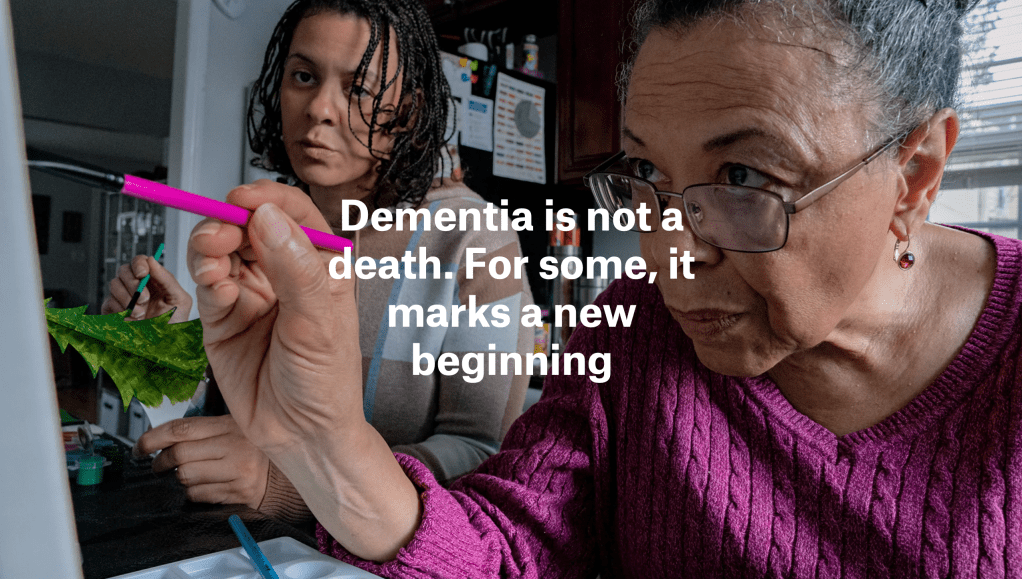
Dementia is not a death

For some, it marks a new beginning

Advocates are reframing the syndrome as a different way of being – one in which potential for growth and connection endures

They argue that dementia is not a hopeless affliction, and that post-diagnostic support should become more humane and scientific. Some are even calling for the condition to be completely reimagined.

One patient, quoted in the dementia expert John Zeisel’s book ‘I’m Still Here’ goes so far as to describe it as ‘a new stage in a wonderful life, no less challenging or interesting than all the earlier stages’.

https://psyche.co/ideas/dementia-is-not-a-death-for-some-it-marks-a-new-beginning

New Drug Approved for Early Alzheimer’s

The Food and Drug Administration on Tuesday approved a new drug for Alzheimer’s disease, the latest in a novel class of treatments that has been greeted with hope, disappointment and skepticism.

The drug, donanemab, to be sold under the brand name Kisunla, was shown in studies to modestly slow the pace of cognitive decline in early stages of the disease. It also had significant safety risks, including swelling and bleeding in the brain.

Kisunla, made by Eli Lilly, is similar to another drug, Leqembi, approved last year. Both are intravenous infusions that attack a protein involved in Alzheimer’s, and both can slow the unfolding of dementia by several months. Both also carry similar safety risks. Leqembi, made by Eisai and Biogen, is given every two weeks; Kisunla is given monthly.

Kisunla has a significant difference that may appeal to patients, doctors and insurers: Lilly says patients can stop the drug after it clears the protein, amyloid, which clumps into plaques in the brains of people with Alzheimer’s.

“Once you’ve removed the target that you’re going after, you then can stop dosing,” said Anne White, an executive vice president of Lilly and president of its neuroscience division. She said that this could reduce the overall cost and inconvenience of the treatment as well as the risk of side effects.

Do we have Alzheimer’s disease all wrong?

“As Science noted in its story on the retracted paper, scientists are still debating whether the amyloid theory is viable. The skeptics cite the fraudulent research and lack of a genuine breakthrough; supporters can point to this new class of drugs including donanemab that have led to some improvement in some patients.”

https://www.vox.com/future-perfect/355108/alzheimers-disease-drug-approval-research-retraction

Two Is Better Than One in the Alzheimer’s Market

“Last week, a panel of independent advisers to the FDA unanimously voted in support of Eli Lilly’s donanemab, a competitor in the same class of drugs that target amyloid plaques in the brain. The FDA is expected to decide on whether to approve the drug by the end of the year.

Life expectancies around the world have surged in recent decades, increasingly putting people at risk of dementia. About one in nine seniors has Alzheimer’s disease, the most common cause of the condition, which works out to some seven million Americans.”

https://finance.yahoo.com/news/two-better-one-alzheimer-market-110000384.html

Healthy diet, exercise, slow decline in Alzheimer’s

A healthy diet and consistent exercise may slow decline in some early-stage Alzheimer’s disease patients, according to research published Friday. 
The study, published in the journal Alzheimer’s Research and Therapy, found that patients in a group who implemented “intensive” lifestyle changes — like eating whole foods, exercising moderately and performing stress management techniques — saw their dementia symptoms stabilize. In the other group, patients who did not alter their habits found their thinking and memory continued to worsen https://thehill.com/policy/healthcare/4711200-diet-exercise-may-slow-decline-in-some-alzheimers-patients-study/

A breakthrough in Alzheimer’s disease

A breakthrough in Alzheimer’s disease The promising potential of klotho

I have this dream that people might be able someday to benefit from klotho, this factor that naturally circulates in our body, that helps with longevity, that helps with other organ systems and enhances the brain.” —Dena Dubal

Dena Dubal is a physician-scientist and professor of neurology at UCSF whose work focuses on mechanisms of longevity and brain resilience. In this episode, Dena delves into the intricacies of the longevity factor klotho: its formation and distribution in the body, the factors such as stress and exercise that impact its levels, and its profound impact on cognitive function and overall brain health. Dena shares insights from exciting research in animal models showing the potential of klotho in treating neurodegenerative diseases as well as its broader implications for organ health and disease prevention. She concludes with an optimistic outlook for future research in humans and the potential of klotho for the prevention and treatment of Alzheimer’s disease.

#303 – A breakthrough in Alzheimer’s disease: the promising potential of klotho for brain health, cognitive decline, and as a therapeutic tool for Alzheimer’s disease | Dena Dubal, M.D., Ph.D.